DIGNIDAD / Floating Monument / Chicago Illinois USA / 2026 - /

Description /
Iván Argote and Floating Museum, DIGNIDAD, 2026, wood, cement, fiber mesh, pigment, flatbed truck
DIGNIDAD was developed by Floating Museum in collaboration with artist Iván Argote and curator Carla Acevedo-Yates. As the fourth installment in the Floating Monuments series, the project continues an exploration of how monuments can function beyond fixed, commemorative objects—reimagining them as forms that move through the city, pointing to erased or suppressed histories, and engaging public life in real time.
Composed of concrete letters spelling the word “DIGNIDAD,” the work exists simultaneously as sculpture, language, and social proposition. Mounted on a flatbed truck, it moves through the city as both object and message, a monument that does not stay still long enough to become invisible.
The project launches in Humboldt Park, a neighborhood with deep cultural and historical significance for Chicago’s Puerto Rican community, and emerges from a multi-year dialogue and creative process. The community stabilized in its current location after persevering through a 1950s urban renewal campaign that displaced over 900 families from their homes in “La Clark” on Chicago’s north side. Broader political struggles—including oppressive laws like La Ley de la Mordaza, which prohibited the display of the Puerto Rican flag, even within one’s own home, also shape the historical context surrounding the project.
Shaped by histories of resistance, resilience, and transcultural solidarity, the work responds to conditions that continue to affect migrant and Latine communities. Beginning as a participant in the Puerto Rican People's Day Parade before traveling to additional sites across the city, the sculpture carries these histories and conversations through visibility and collective encounter.
The word “dignidad” functions as both language and form. Its use of Spanish is intentional, reflecting the presence of communities whose language, labor, and culture continue to shape the city. In this sense, the work approaches concrete poetry: meaning carried not only through language, but through form, scale, material, and movement. Here, the word itself becomes material—moving through public space as something physical and shared.
DIGNIDAD brings together Argote’s longstanding engagement with public space and Floating Museum’s ongoing exploration of the monument as a mobile and participatory form. Developed collaboratively with Carla Acevedo-Yates through the Floating Monuments series, the project extends these shared interests through sculpture and collective participation—creating a monument that remains visible through circulation, and public life.
Click here to read the full Program Annoucement.
Click here to read the full Press Release.
![]()
DIGNIDAD is a collaboration with Iván Argote and Carla Acevedo-Yates and was made possible by generous support from the Mellon Foundation.
![]()
Iván Argote and Floating Museum, DIGNIDAD, 2026, wood, cement, fiber mesh, pigment, flatbed truck
DIGNIDAD was developed by Floating Museum in collaboration with artist Iván Argote and curator Carla Acevedo-Yates. As the fourth installment in the Floating Monuments series, the project continues an exploration of how monuments can function beyond fixed, commemorative objects—reimagining them as forms that move through the city, pointing to erased or suppressed histories, and engaging public life in real time.
Composed of concrete letters spelling the word “DIGNIDAD,” the work exists simultaneously as sculpture, language, and social proposition. Mounted on a flatbed truck, it moves through the city as both object and message, a monument that does not stay still long enough to become invisible.
The project launches in Humboldt Park, a neighborhood with deep cultural and historical significance for Chicago’s Puerto Rican community, and emerges from a multi-year dialogue and creative process. The community stabilized in its current location after persevering through a 1950s urban renewal campaign that displaced over 900 families from their homes in “La Clark” on Chicago’s north side. Broader political struggles—including oppressive laws like La Ley de la Mordaza, which prohibited the display of the Puerto Rican flag, even within one’s own home, also shape the historical context surrounding the project.
Shaped by histories of resistance, resilience, and transcultural solidarity, the work responds to conditions that continue to affect migrant and Latine communities. Beginning as a participant in the Puerto Rican People's Day Parade before traveling to additional sites across the city, the sculpture carries these histories and conversations through visibility and collective encounter.
The word “dignidad” functions as both language and form. Its use of Spanish is intentional, reflecting the presence of communities whose language, labor, and culture continue to shape the city. In this sense, the work approaches concrete poetry: meaning carried not only through language, but through form, scale, material, and movement. Here, the word itself becomes material—moving through public space as something physical and shared.
DIGNIDAD brings together Argote’s longstanding engagement with public space and Floating Museum’s ongoing exploration of the monument as a mobile and participatory form. Developed collaboratively with Carla Acevedo-Yates through the Floating Monuments series, the project extends these shared interests through sculpture and collective participation—creating a monument that remains visible through circulation, and public life.
Click here to read the full Program Annoucement.
Click here to read the full Press Release.

DIGNIDAD is a collaboration with Iván Argote and Carla Acevedo-Yates and was made possible by generous support from the Mellon Foundation.






Description /
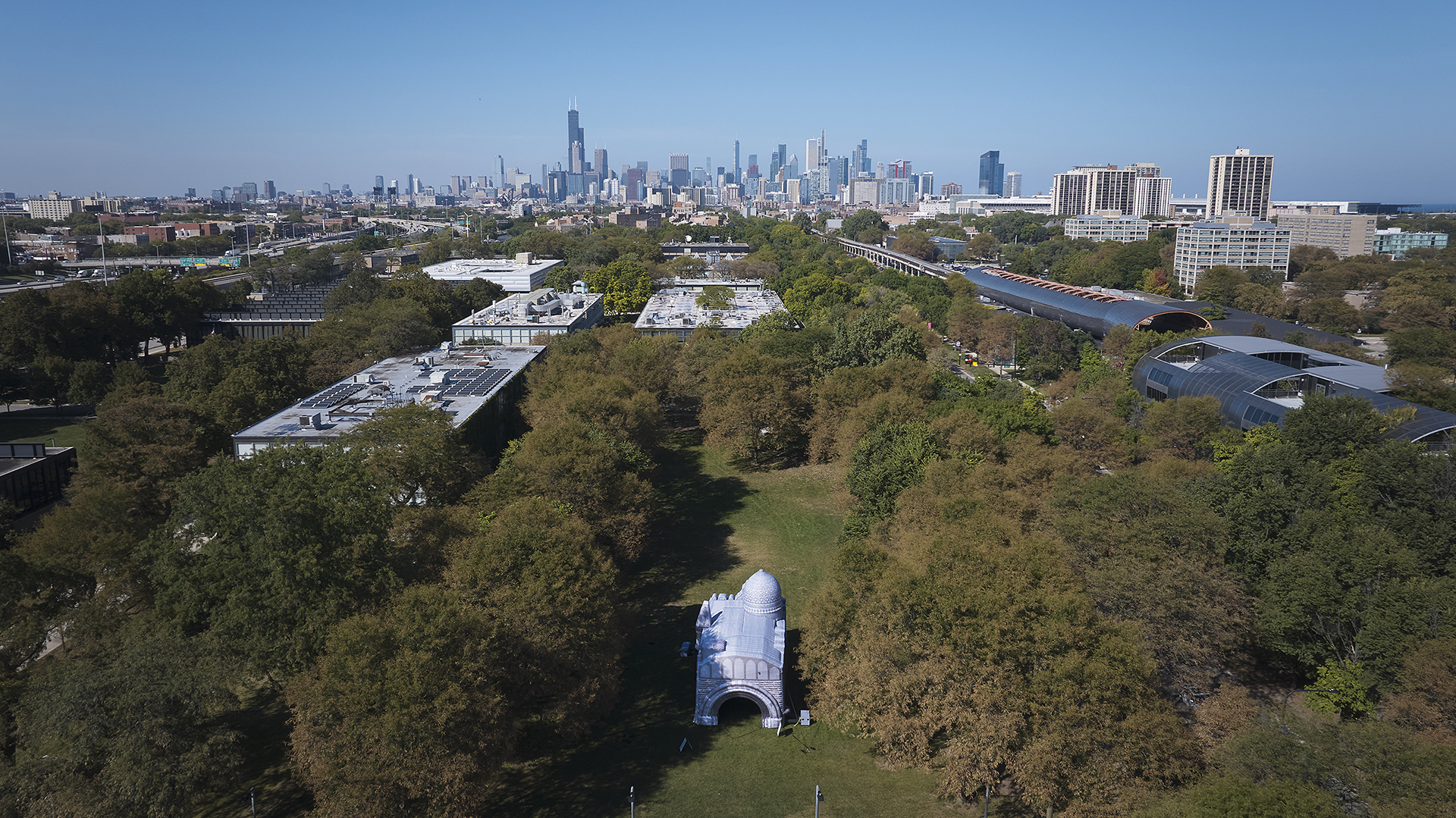
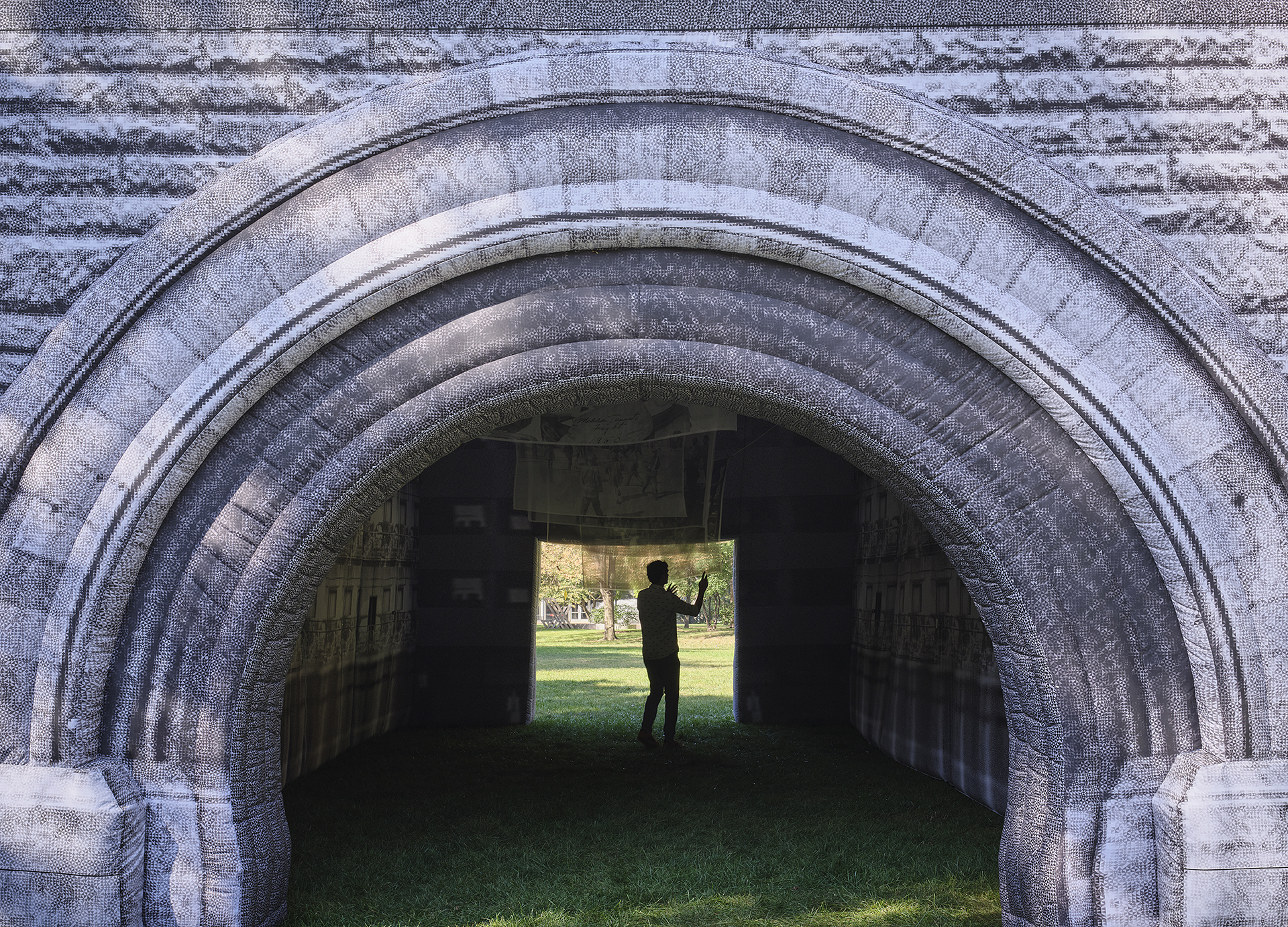
for Mecca, 2025, polyester blend fabric, dye sublimation, air blowers, hardware, 30’x41’x24’
for Mecca is part of Floating Museum’s Floating Monuments series. A ghostly, inflatable architecture, this monument moves to sites across Chicago and beyond, serving as a dynamic platform for memory, conversation, exhibition, performance, and education. Its design honors the Mecca Flats apartment building—once a vibrant center of Black life in Chicago’s Bronzeville—and conjures traces of the neighborhood’s historic architecture. Though the Mecca Flats building was demolished in 1952 in the name of urban renewal, its legacy lives on through art, music, and memory.
Rather than replicating the original structure, for Mecca is an amalgam of photographs, writings, and sound recordings that collapse Bronzeville’s rich cultural history into the present. It invites reflection on the demolition of Mecca Flats and its replacement by S.R. Crown Hall—an act emblematic of broader patterns of displacement across Chicago and cities throughout the United States. By surfacing these histories, for Mecca fosters dialogue, reconciliation, and a call to deeper inquiry. It acknowledges how racism and capitalism have accelerated the destabilization and erasure of significant Black cultural spaces.
Drifting, collapsing, and reappearing, for Mecca challenges traditional monuments and prompts us to ask: How do we remember? Who are monuments built for? And how can resilience be cultivated through art, storytelling, and collective care in an ever-shifting city and world?
Click here to read the full Press Release.
for Mecca is a collaboration with Lead Archivist Skyla Hearn, and was made possible by generous support from the Mellon Foundation and the Terra Foundation for American Art. Additional project support was provided by the Poetry Foundation, the Graham Foundation for Advanced Studies in the Fine Arts, Indiana University, and the University of Illinois Chicago.
This project is part of Art Design Chicago, a citywide collaboration initiated by the Terra Foundation for American Art that aims to expand understandings of Chicago’s creative communities, past and present.
![]()
![]()
![]()
![]()
![]()
for Mecca, 2025, polyester blend fabric, dye sublimation, air blowers, hardware, 30’x41’x24’
for Mecca is part of Floating Museum’s Floating Monuments series. A ghostly, inflatable architecture, this monument moves to sites across Chicago and beyond, serving as a dynamic platform for memory, conversation, exhibition, performance, and education. Its design honors the Mecca Flats apartment building—once a vibrant center of Black life in Chicago’s Bronzeville—and conjures traces of the neighborhood’s historic architecture. Though the Mecca Flats building was demolished in 1952 in the name of urban renewal, its legacy lives on through art, music, and memory.
Rather than replicating the original structure, for Mecca is an amalgam of photographs, writings, and sound recordings that collapse Bronzeville’s rich cultural history into the present. It invites reflection on the demolition of Mecca Flats and its replacement by S.R. Crown Hall—an act emblematic of broader patterns of displacement across Chicago and cities throughout the United States. By surfacing these histories, for Mecca fosters dialogue, reconciliation, and a call to deeper inquiry. It acknowledges how racism and capitalism have accelerated the destabilization and erasure of significant Black cultural spaces.
Drifting, collapsing, and reappearing, for Mecca challenges traditional monuments and prompts us to ask: How do we remember? Who are monuments built for? And how can resilience be cultivated through art, storytelling, and collective care in an ever-shifting city and world?
Click here to read the full Press Release.
for Mecca is a collaboration with Lead Archivist Skyla Hearn, and was made possible by generous support from the Mellon Foundation and the Terra Foundation for American Art. Additional project support was provided by the Poetry Foundation, the Graham Foundation for Advanced Studies in the Fine Arts, Indiana University, and the University of Illinois Chicago.
This project is part of Art Design Chicago, a citywide collaboration initiated by the Terra Foundation for American Art that aims to expand understandings of Chicago’s creative communities, past and present.










Description /
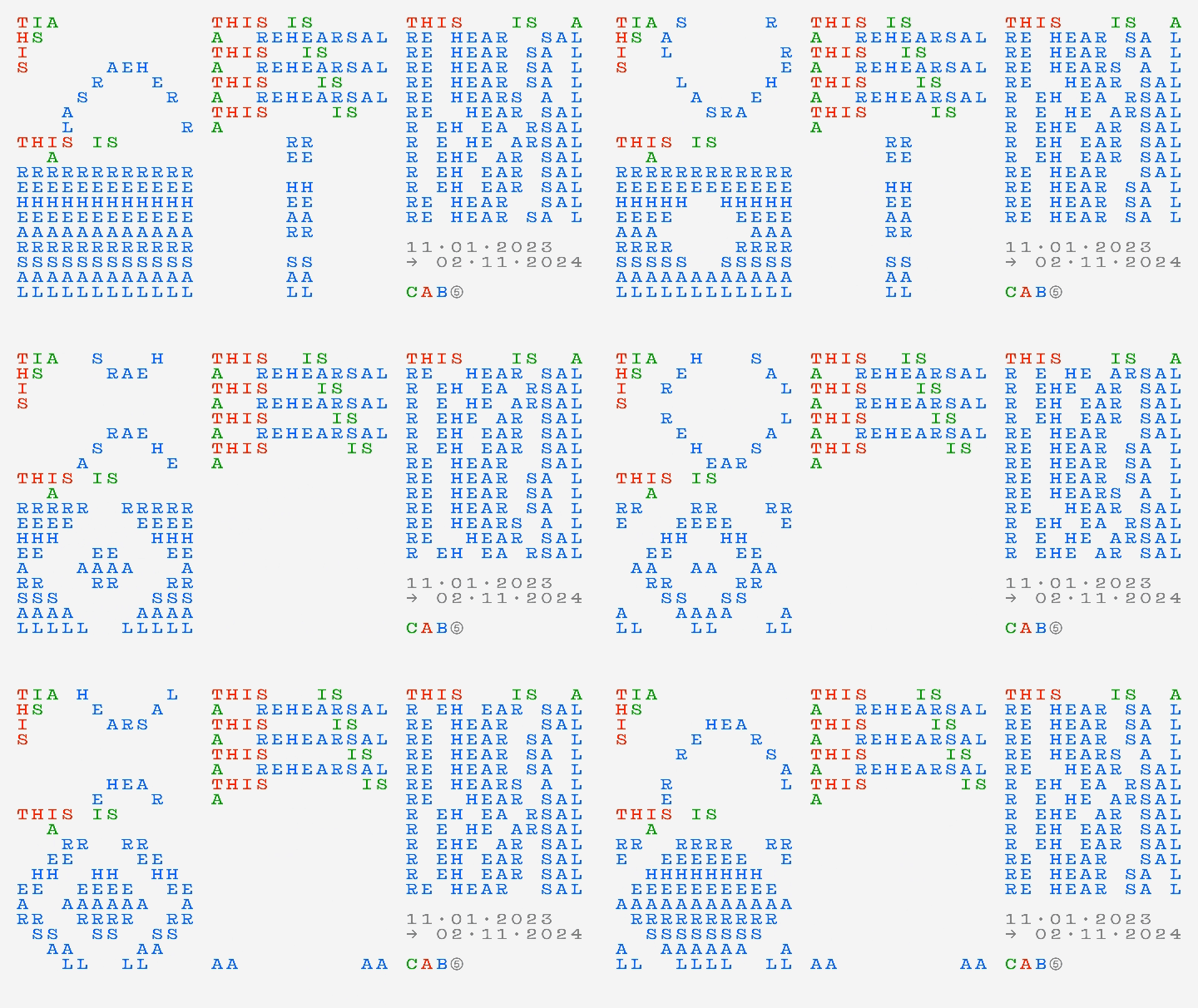
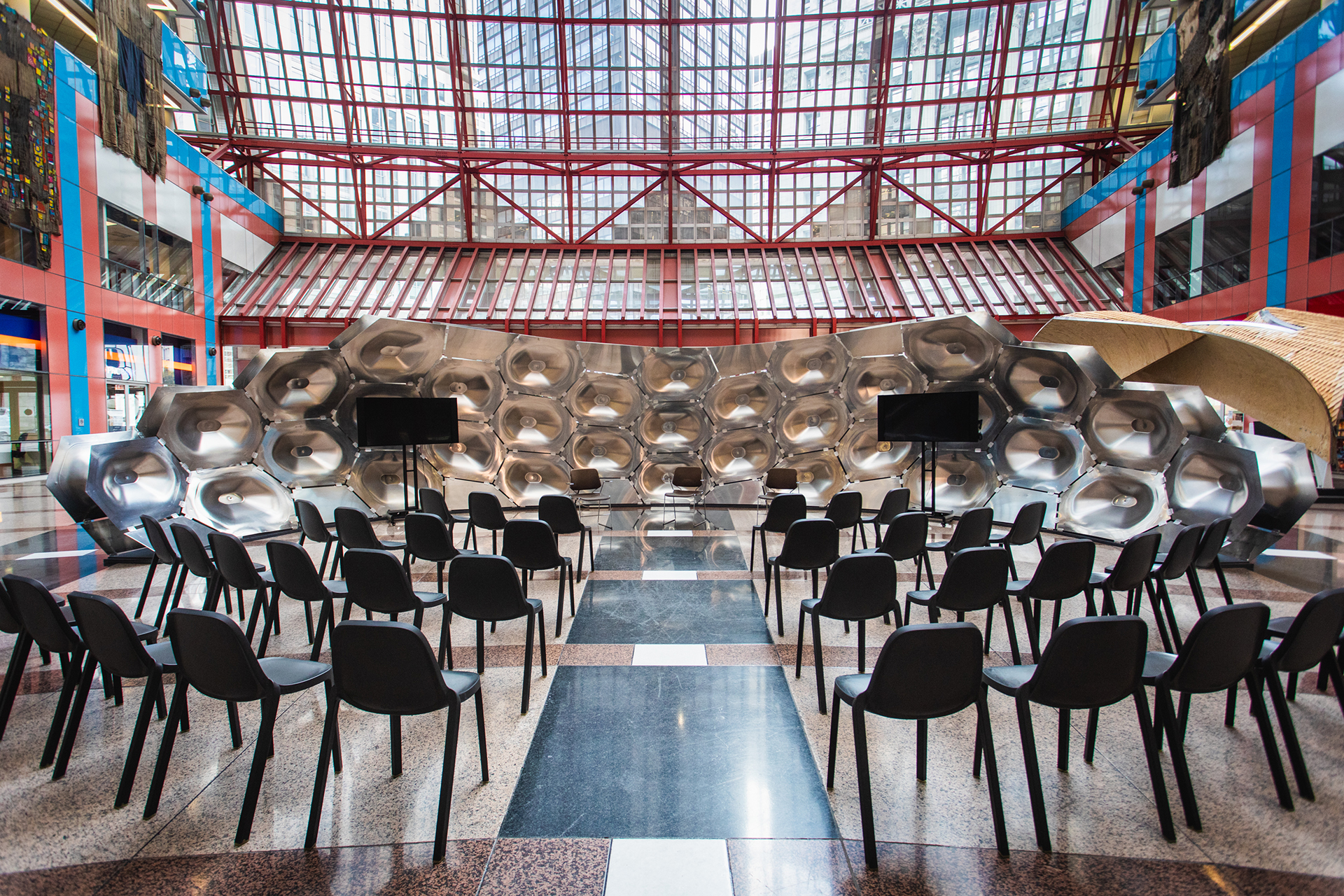
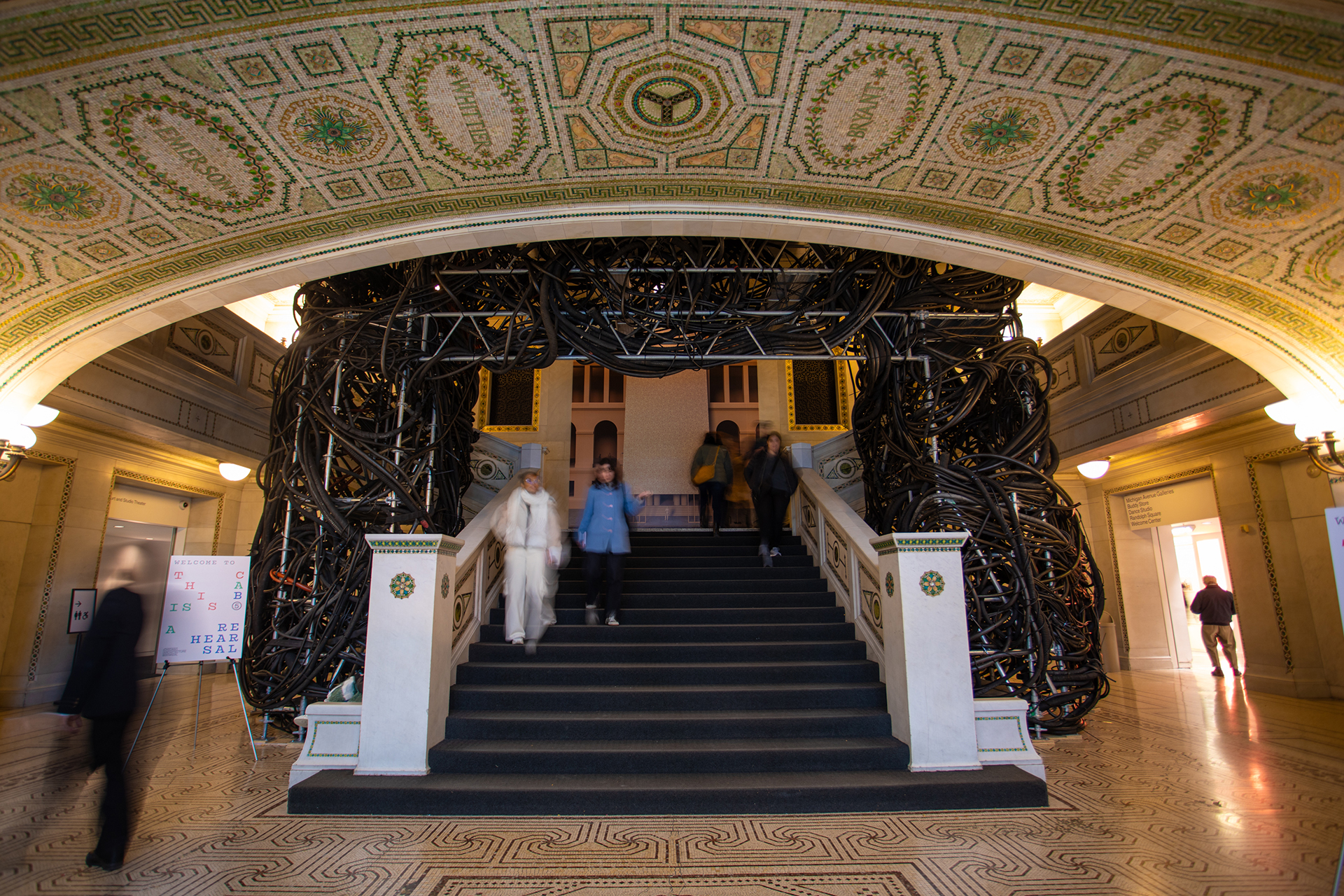
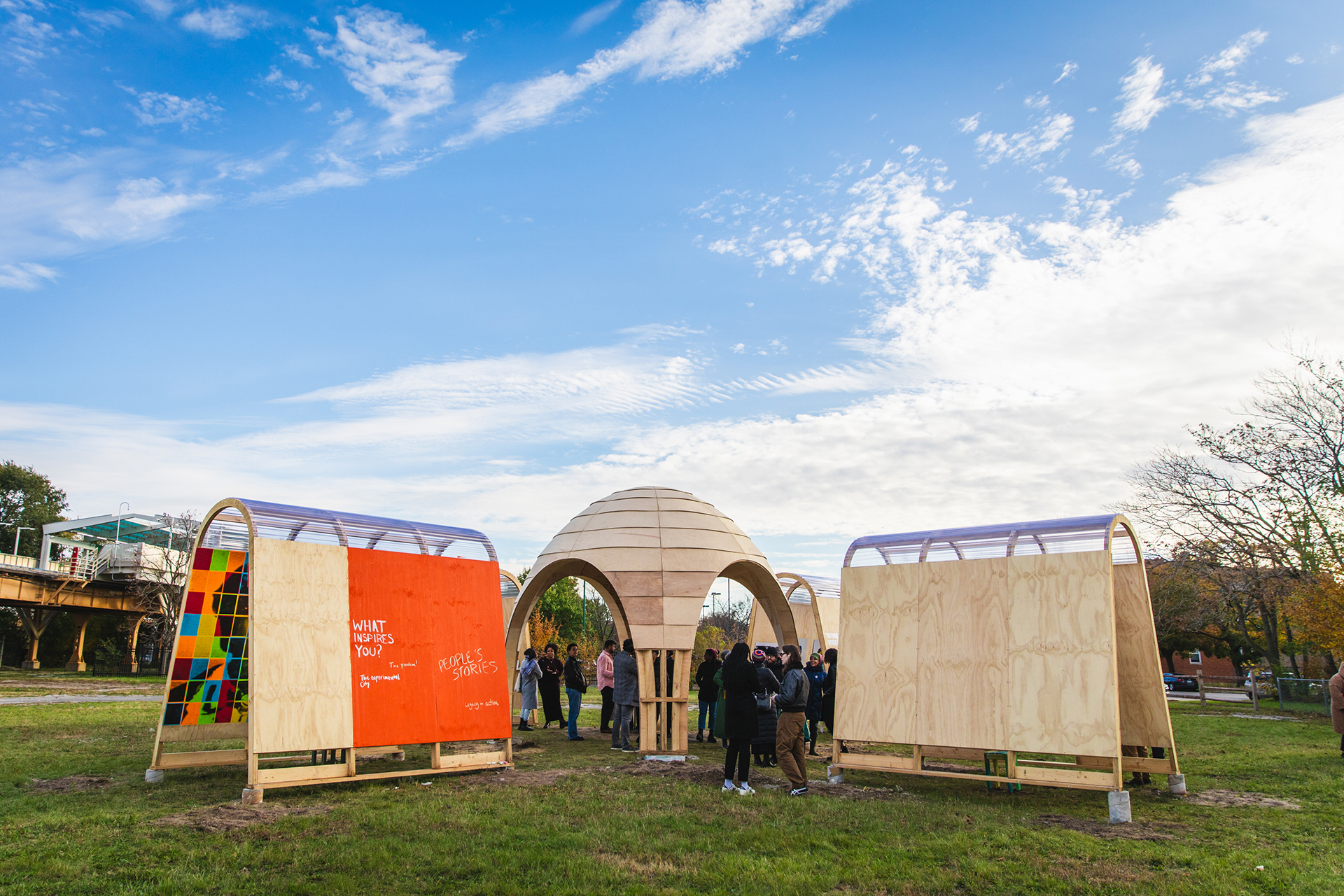
This is a Rehearsal invites audiences to consider cities as a continuous process rather than an enduring object. “This,” is a pronoun, adjective, and adverb; it points elsewhere. It refers to the myriad forms of art and design that evolve and emanate from the perpetual churn of the city: architectures, infrastructures, landscapes, monuments, technologies, criticisms, poetic forms, performances, spaces, theories, histories, and social organizations. In parallel, the word “rehearsal” offers an alternative to a manifesto. Rather than declare one particular aim, rehearsal is an open-ended framework that is intentionally designed to allow for uncertainty, progress, failure, and redemption. Rehearsals, like cities, coordinate a range of people coming together from different contexts, cultures, and lived experiences to produce environments in fulfillment of a range of perspectives. In this sense, rehearsals are structures of constant coordination and re-negotiation.
“This” also refers to CAB itself. A biennial is a form that organizes other forms. We do not see it as a stranger or outsider; we see it as an integral function of the city. It is in itself a process of production. Biennials are informed by the city and offer a range of potential forms to the city. While CAB is expressed as a range of exhibitions, installations, performances, and spectacles, we see This is a Rehearsal as a feedback loop and timing device. A biennial is not merely a conversation about cities, but a conversation of, and with, the city. It is also a reflection on a range of cities, as they are, as they were, and as they could be.
List of Participants
For more information on CAB 5: This is a Rehearsal, please visit:
https://chicagoarchitecturebiennial.org/edition/cab-5/
This is a Rehearsal invites audiences to consider cities as a continuous process rather than an enduring object. “This,” is a pronoun, adjective, and adverb; it points elsewhere. It refers to the myriad forms of art and design that evolve and emanate from the perpetual churn of the city: architectures, infrastructures, landscapes, monuments, technologies, criticisms, poetic forms, performances, spaces, theories, histories, and social organizations. In parallel, the word “rehearsal” offers an alternative to a manifesto. Rather than declare one particular aim, rehearsal is an open-ended framework that is intentionally designed to allow for uncertainty, progress, failure, and redemption. Rehearsals, like cities, coordinate a range of people coming together from different contexts, cultures, and lived experiences to produce environments in fulfillment of a range of perspectives. In this sense, rehearsals are structures of constant coordination and re-negotiation.
“This” also refers to CAB itself. A biennial is a form that organizes other forms. We do not see it as a stranger or outsider; we see it as an integral function of the city. It is in itself a process of production. Biennials are informed by the city and offer a range of potential forms to the city. While CAB is expressed as a range of exhibitions, installations, performances, and spectacles, we see This is a Rehearsal as a feedback loop and timing device. A biennial is not merely a conversation about cities, but a conversation of, and with, the city. It is also a reflection on a range of cities, as they are, as they were, and as they could be.
List of Participants
For more information on CAB 5: This is a Rehearsal, please visit:
https://chicagoarchitecturebiennial.org/edition/cab-5/






Description /
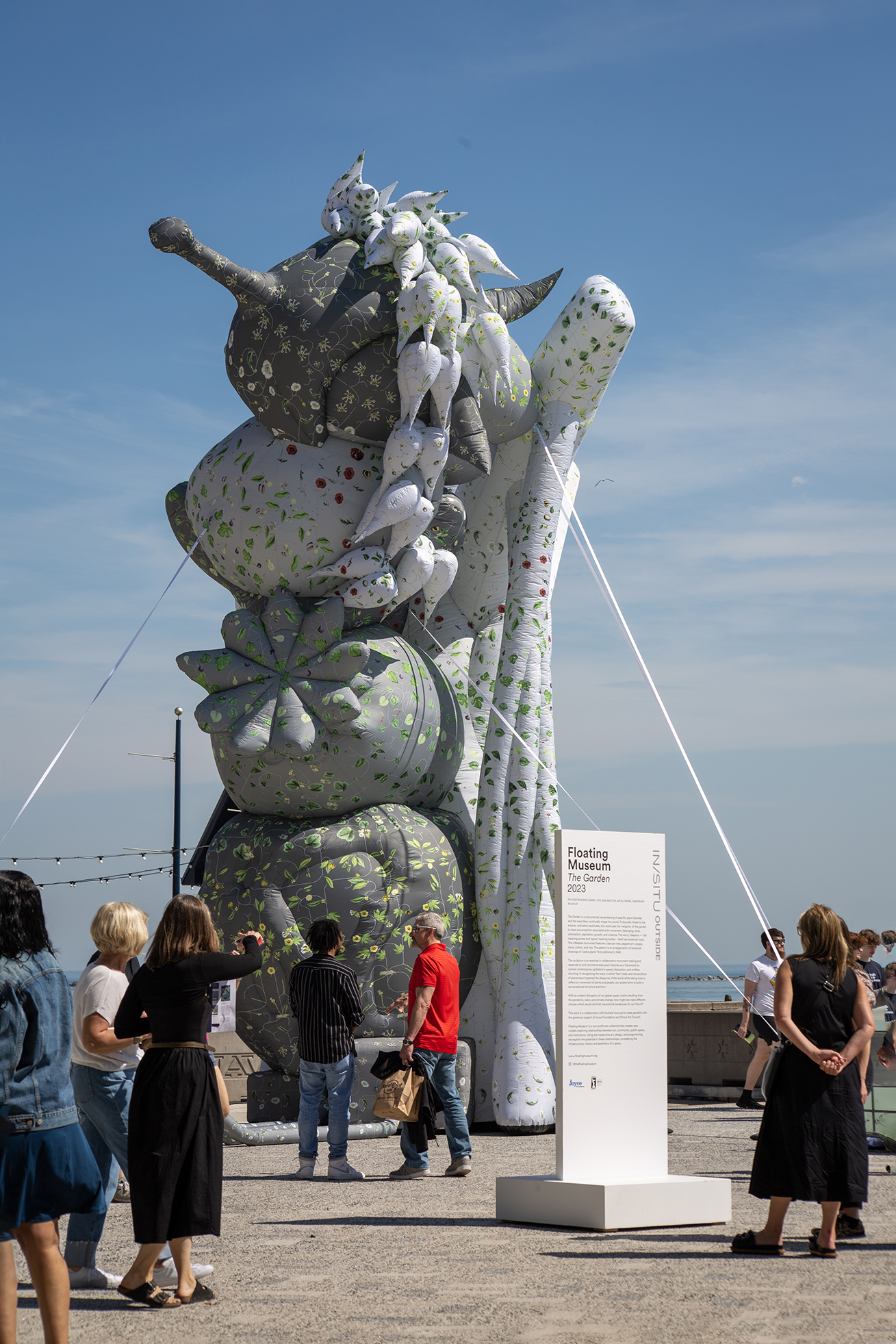
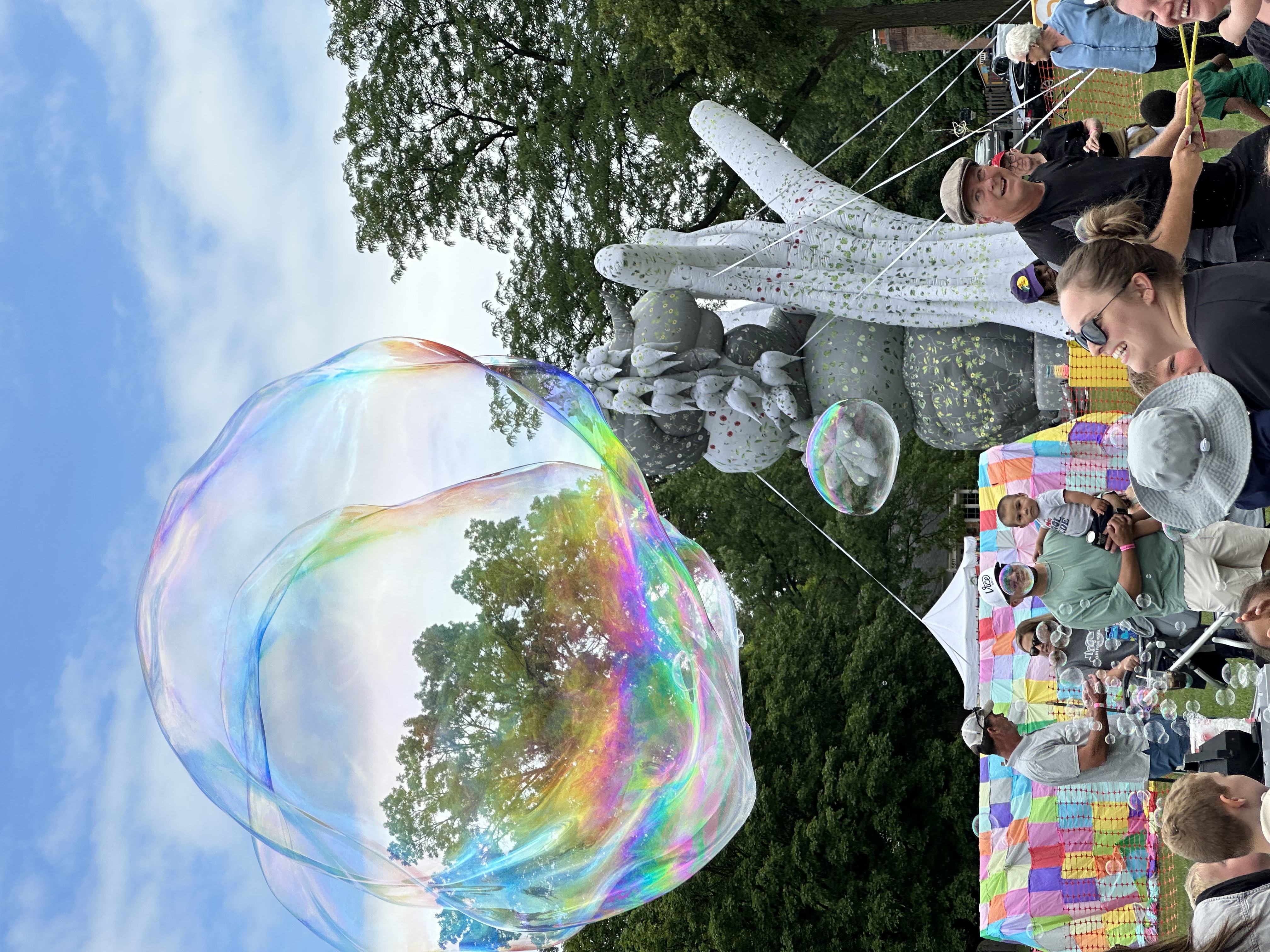
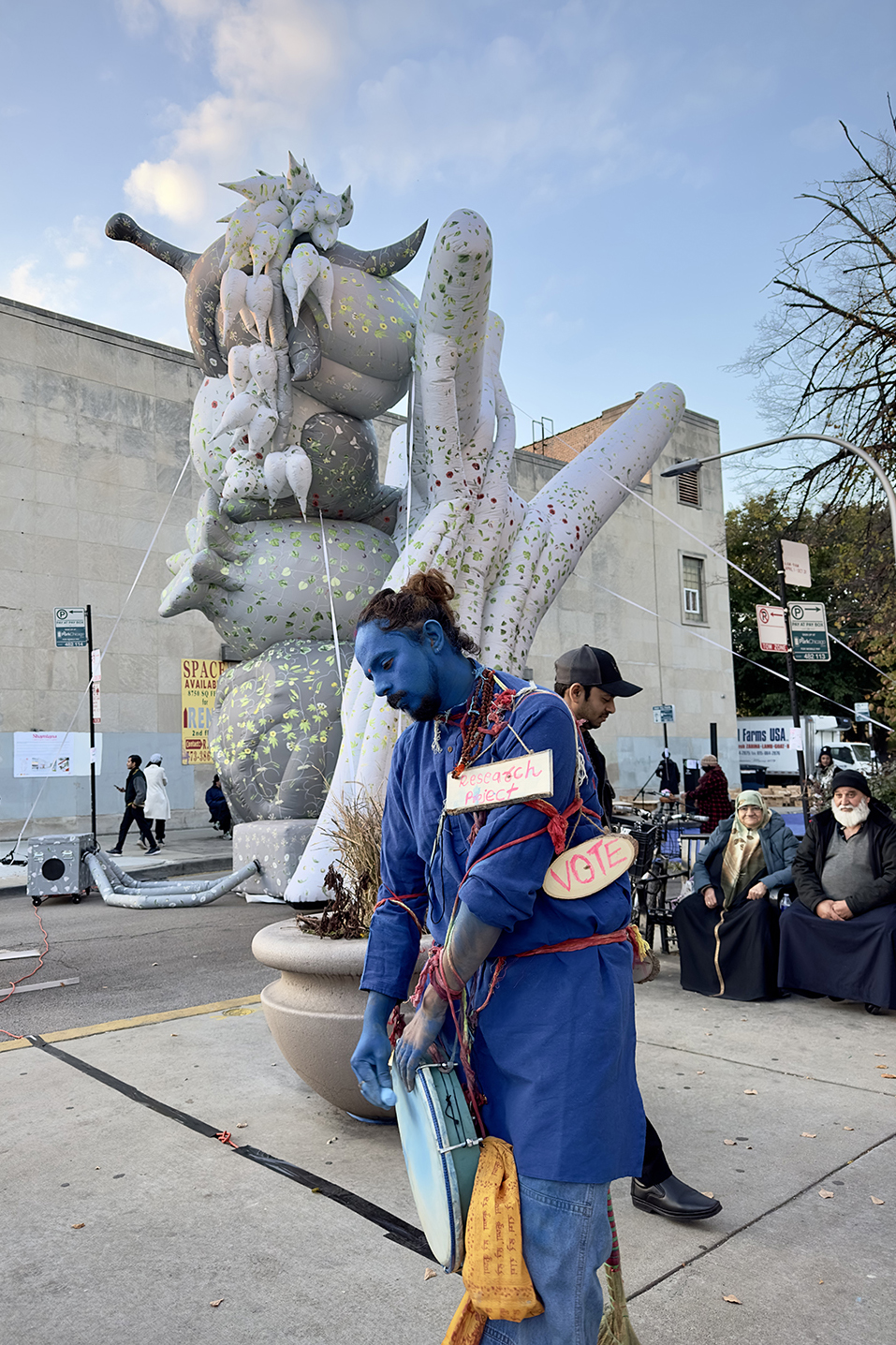
The Garden, 2022, polyester blend fabric, dye sublimation, air blowers, hardware, 30’x22’x12’
Floating Monuments: The Garden with Kushala Vora places the monument–an already complex, hybrid, and enigmatic object–at the center as a catalyst for conversation, scenographic intervention, and a performance platform. The project includes a new inflatable sculpture exhibit in Floating Museum's Floating Monuments series. Docents engage the general public during the day and the sculpture and platform transform into a performance series at night. A curated series of sets will explore project themes of diaspora, improvisation, and create a space for musicians and performers.
The project focuses on the role of plants as world makers. The ephemeral monument, platform and performance series serve as a catalyst for conversation about the movement of people and plants such as cotton, black pepper, poppy, rice and clove. The word, diaspora–'dia' meaning across and 'spora' meaning scatter–itself has botanical roots. Vasco Da Gama and Columbus sought out the Indian subcontinent for direct access to spices. This 'discovery’/exploitation of people and plants as 'resources' have continued to shape the way we see ourselves, each other and the landscape that we reside with. The monument aims to connect multiplicities through these routes of trade and passage.
Profoundly linked to the empire, cultivation and trade, plant types have shaped and continue to shape wide-reaching systems. With an evident disruption of our global supply chains resulting from the pandemic, wars and climate change, how might we make different choices which would diminish neo-colonial tendencies? The project aims to use the metaphor of garden to conjure up these themes and associated questions, and the ways in which they have affected ecological change, colonialism, capitalism, and violence. Additionally, the piece aims to blur the lines between dialogic platform, sculpture, and performance to model a pluralistic approach to monumentality.
If, like Rebecca Solnit writes in the 'Ruins of Memory' from 2007, the United States is a country that in many ways functions as a country without a past, an amnesiac landscape, a country filled with cities that are the eradication, even the ruin, of the landscape from which it rose, Floating Monuments: The Garden proposes a monumental remembering of specific plant's histories as a framework to contest contemporary globalism's speed, dislocation and endless churning. In recognizing the ways in which ‘free' trade, and monoculture of plants have shaped the diaspora's of the world while taking time to reflect on movement of plants and people, our project aims to build a conversational structure.
This project is made possible with the generous support of the Illinois Arts Council, and the Joyce Foundation.
The Garden, 2022, polyester blend fabric, dye sublimation, air blowers, hardware, 30’x22’x12’
Floating Monuments: The Garden with Kushala Vora places the monument–an already complex, hybrid, and enigmatic object–at the center as a catalyst for conversation, scenographic intervention, and a performance platform. The project includes a new inflatable sculpture exhibit in Floating Museum's Floating Monuments series. Docents engage the general public during the day and the sculpture and platform transform into a performance series at night. A curated series of sets will explore project themes of diaspora, improvisation, and create a space for musicians and performers.
The project focuses on the role of plants as world makers. The ephemeral monument, platform and performance series serve as a catalyst for conversation about the movement of people and plants such as cotton, black pepper, poppy, rice and clove. The word, diaspora–'dia' meaning across and 'spora' meaning scatter–itself has botanical roots. Vasco Da Gama and Columbus sought out the Indian subcontinent for direct access to spices. This 'discovery’/exploitation of people and plants as 'resources' have continued to shape the way we see ourselves, each other and the landscape that we reside with. The monument aims to connect multiplicities through these routes of trade and passage.
Profoundly linked to the empire, cultivation and trade, plant types have shaped and continue to shape wide-reaching systems. With an evident disruption of our global supply chains resulting from the pandemic, wars and climate change, how might we make different choices which would diminish neo-colonial tendencies? The project aims to use the metaphor of garden to conjure up these themes and associated questions, and the ways in which they have affected ecological change, colonialism, capitalism, and violence. Additionally, the piece aims to blur the lines between dialogic platform, sculpture, and performance to model a pluralistic approach to monumentality.
If, like Rebecca Solnit writes in the 'Ruins of Memory' from 2007, the United States is a country that in many ways functions as a country without a past, an amnesiac landscape, a country filled with cities that are the eradication, even the ruin, of the landscape from which it rose, Floating Monuments: The Garden proposes a monumental remembering of specific plant's histories as a framework to contest contemporary globalism's speed, dislocation and endless churning. In recognizing the ways in which ‘free' trade, and monoculture of plants have shaped the diaspora's of the world while taking time to reflect on movement of plants and people, our project aims to build a conversational structure.
This project is made possible with the generous support of the Illinois Arts Council, and the Joyce Foundation.
Photography courtesy of the Art Institute of Chicago.
Description /
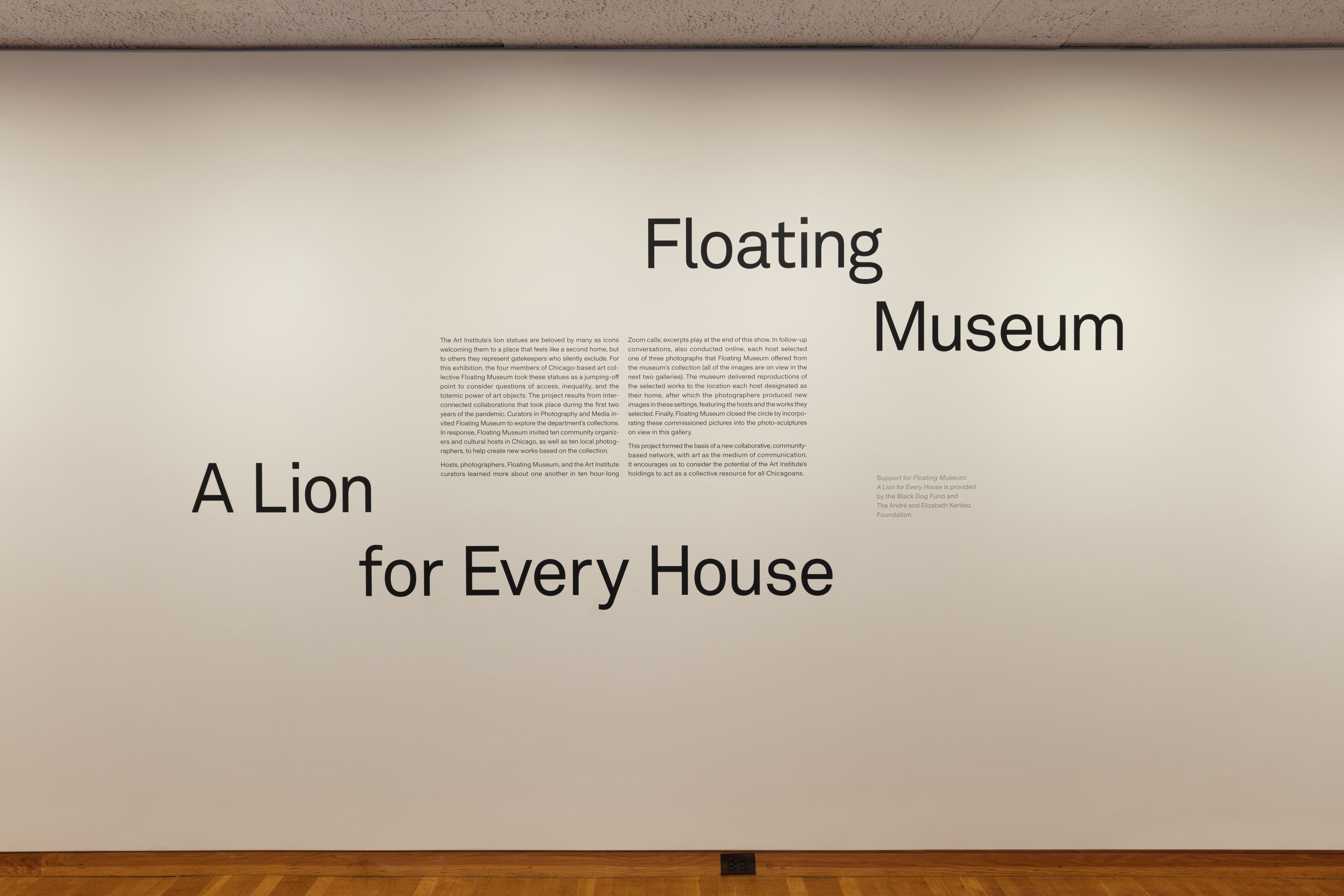
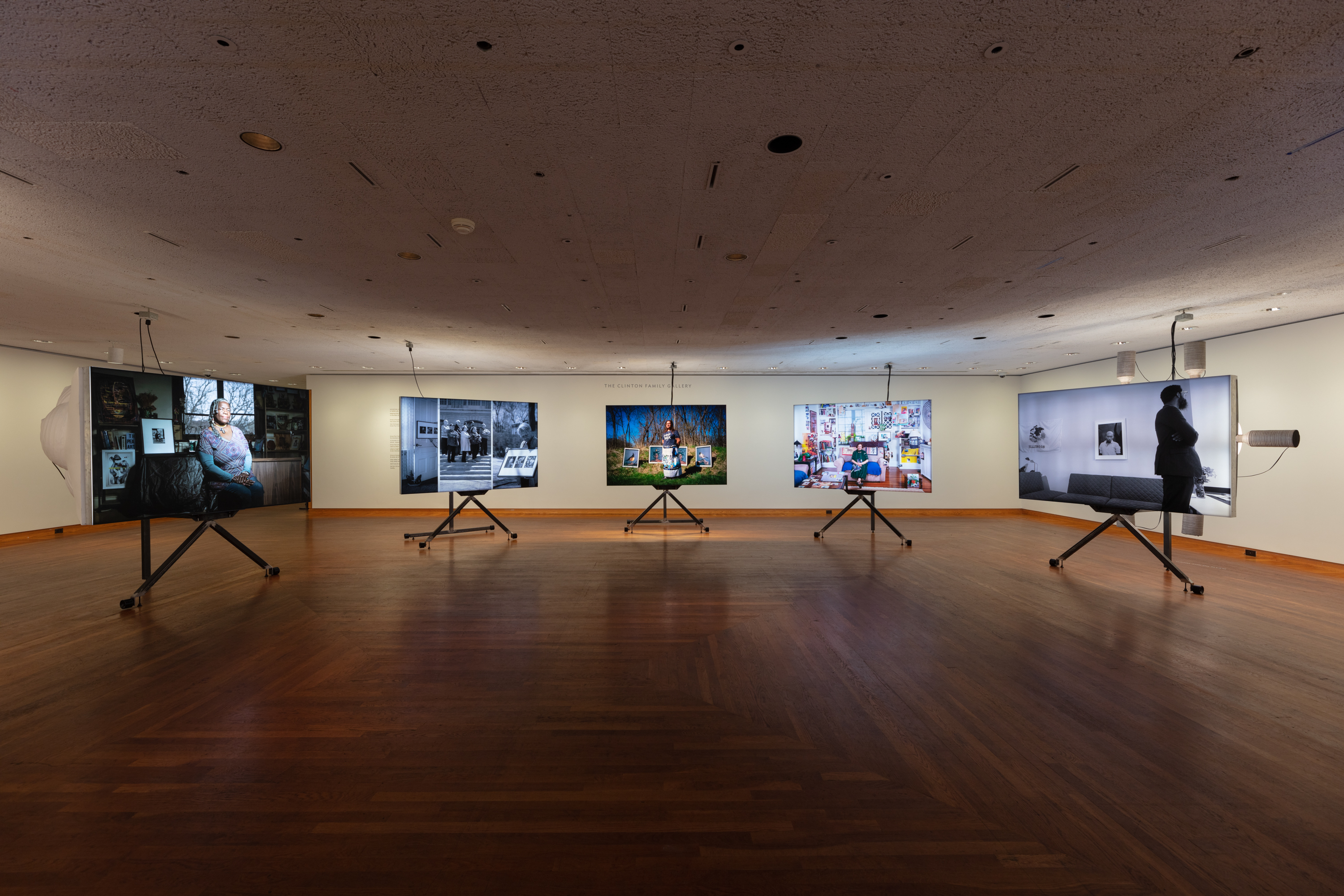
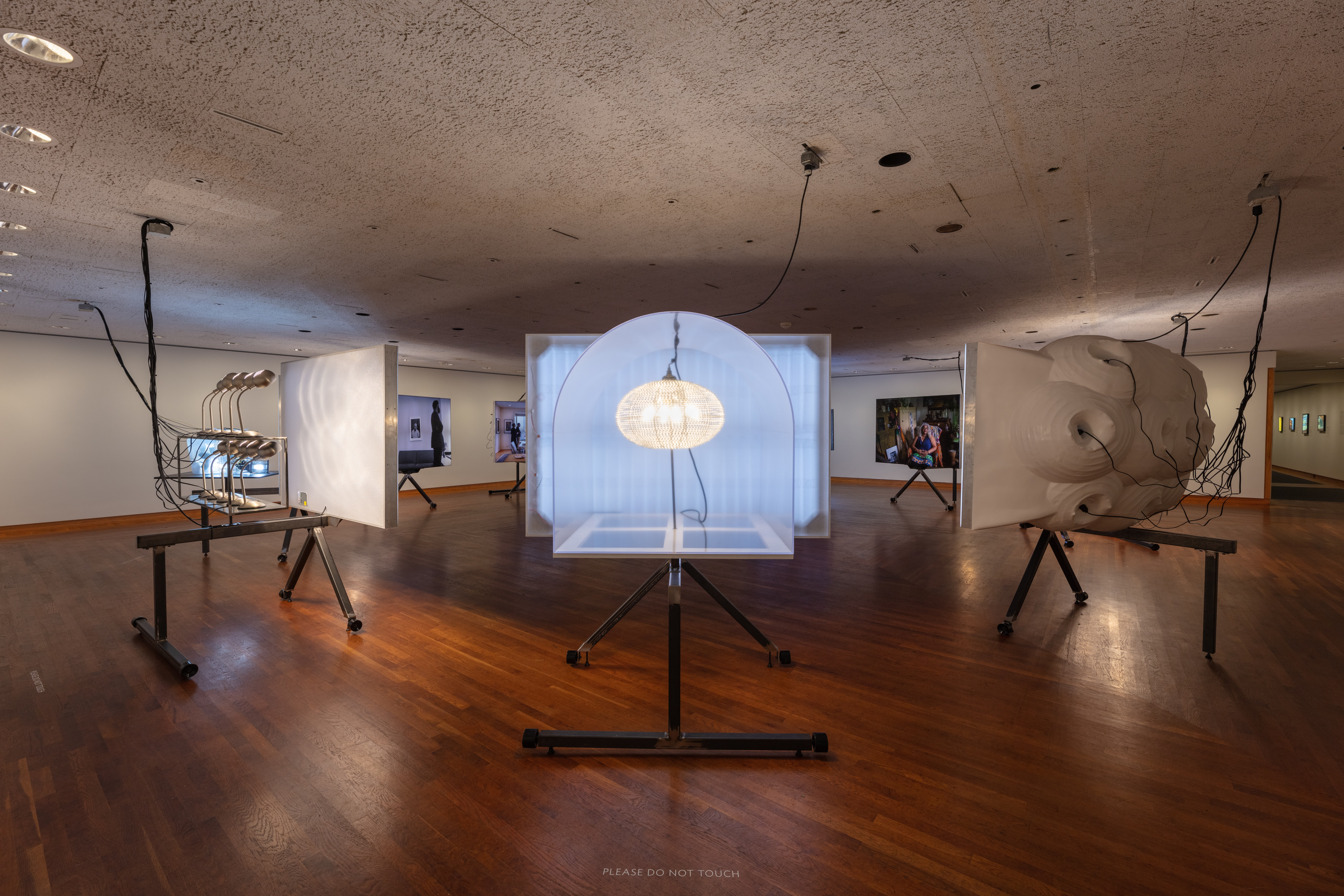
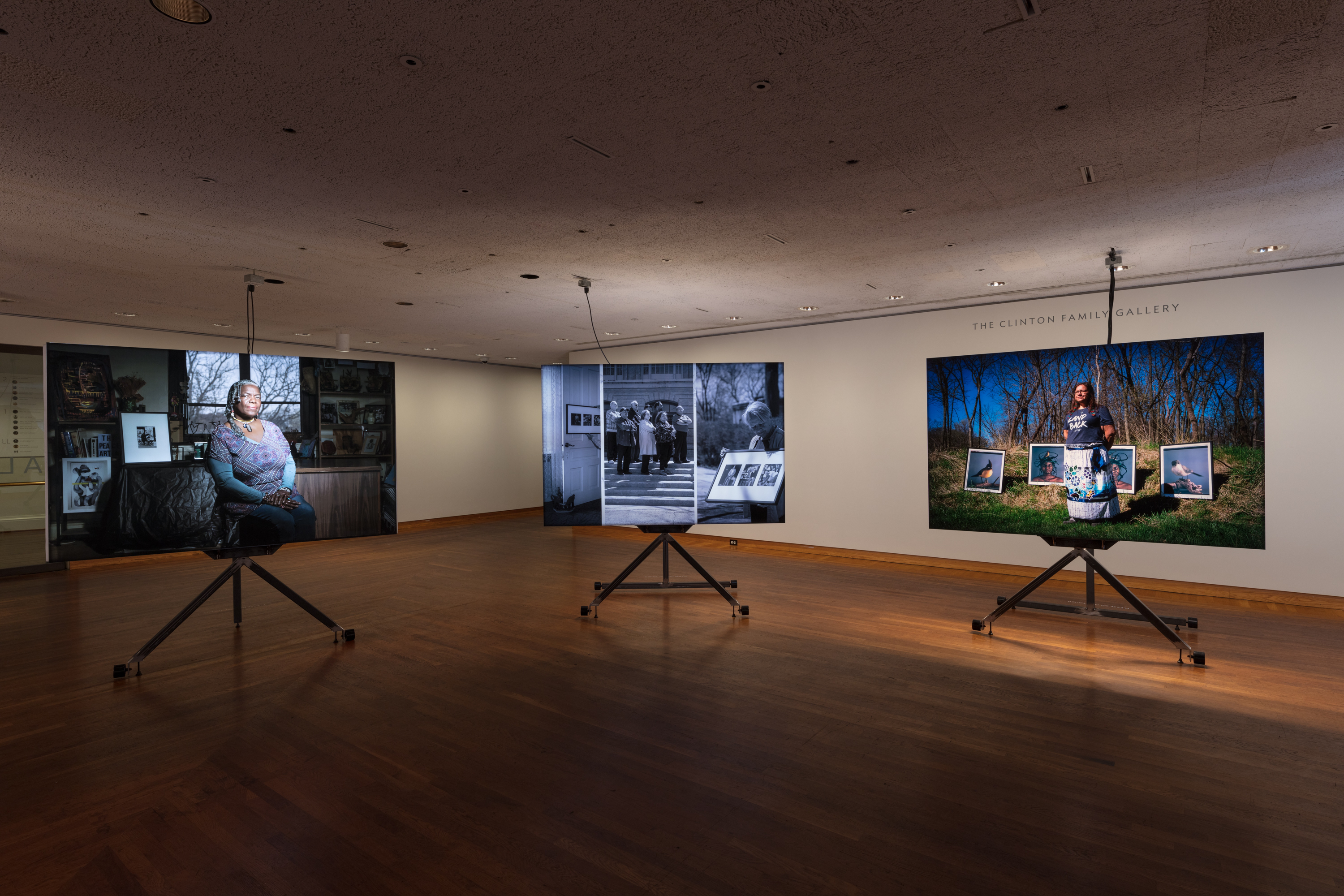
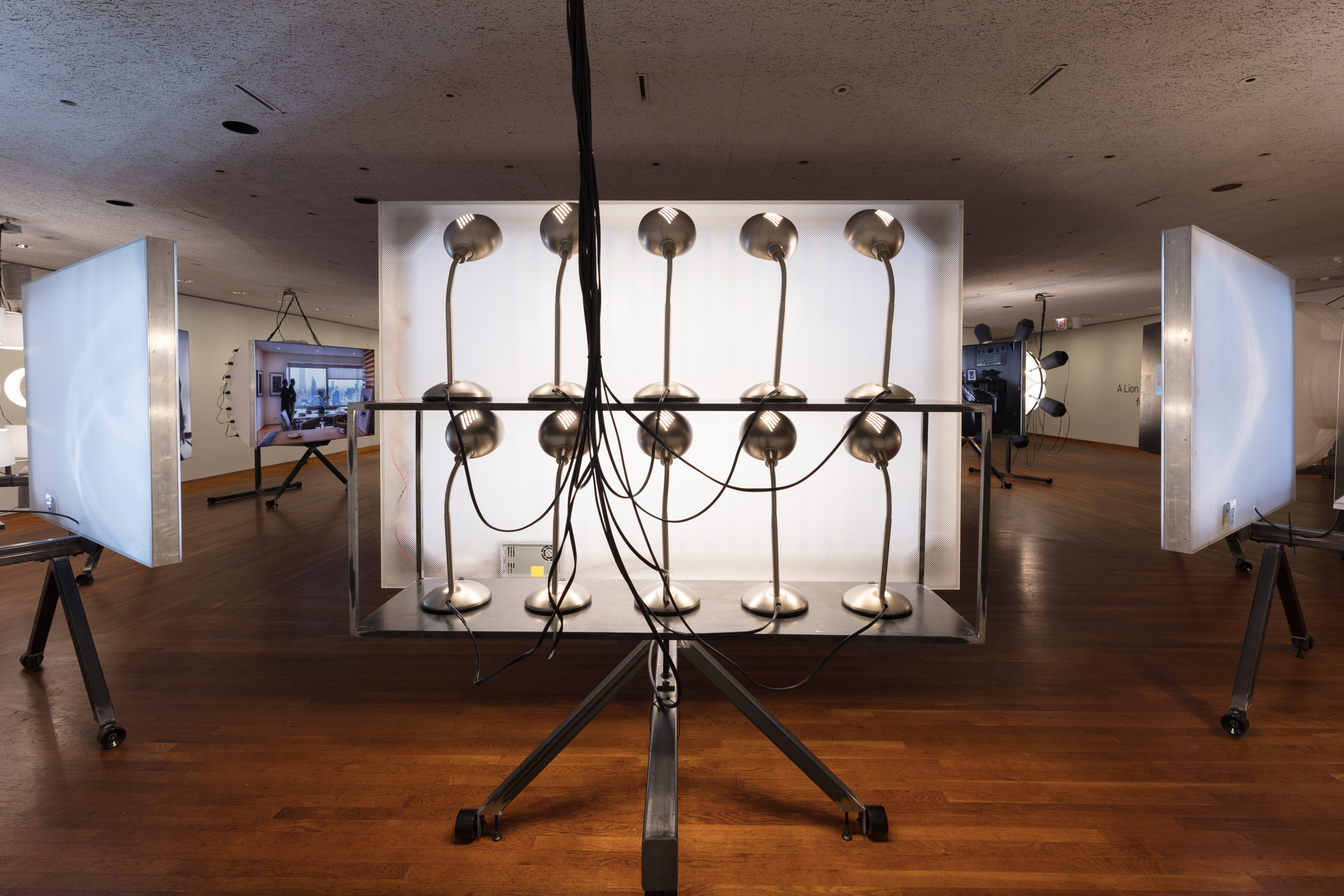
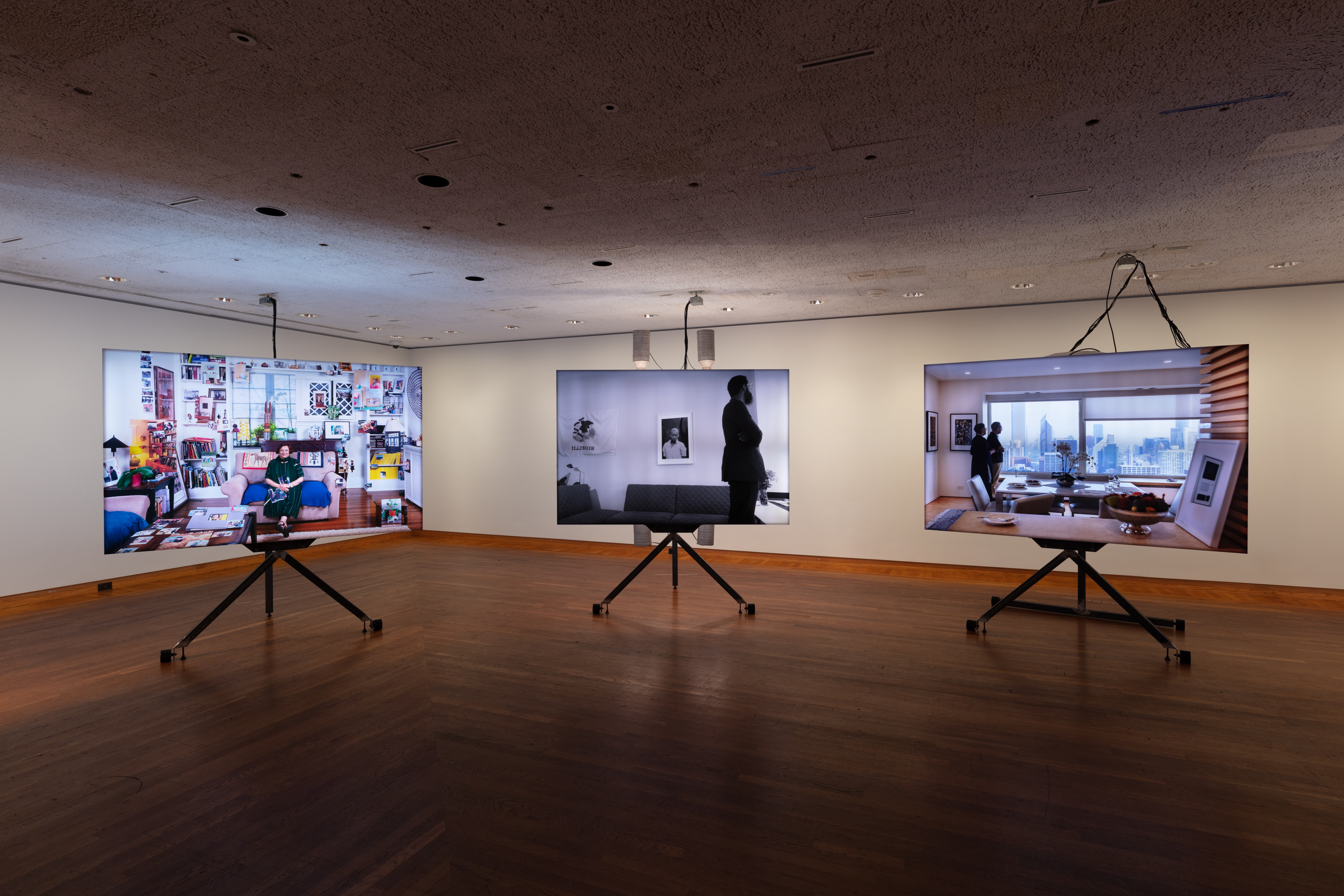
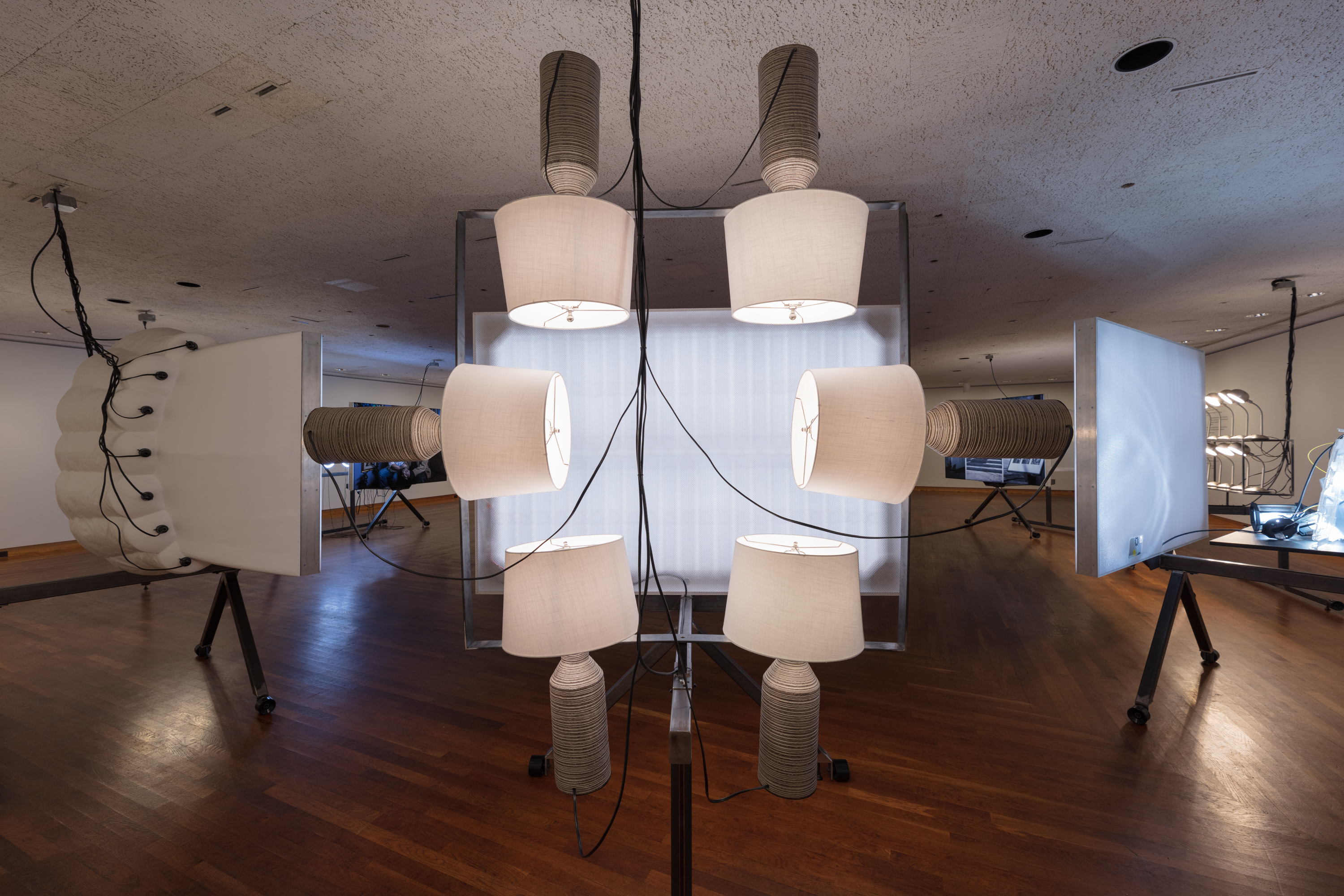
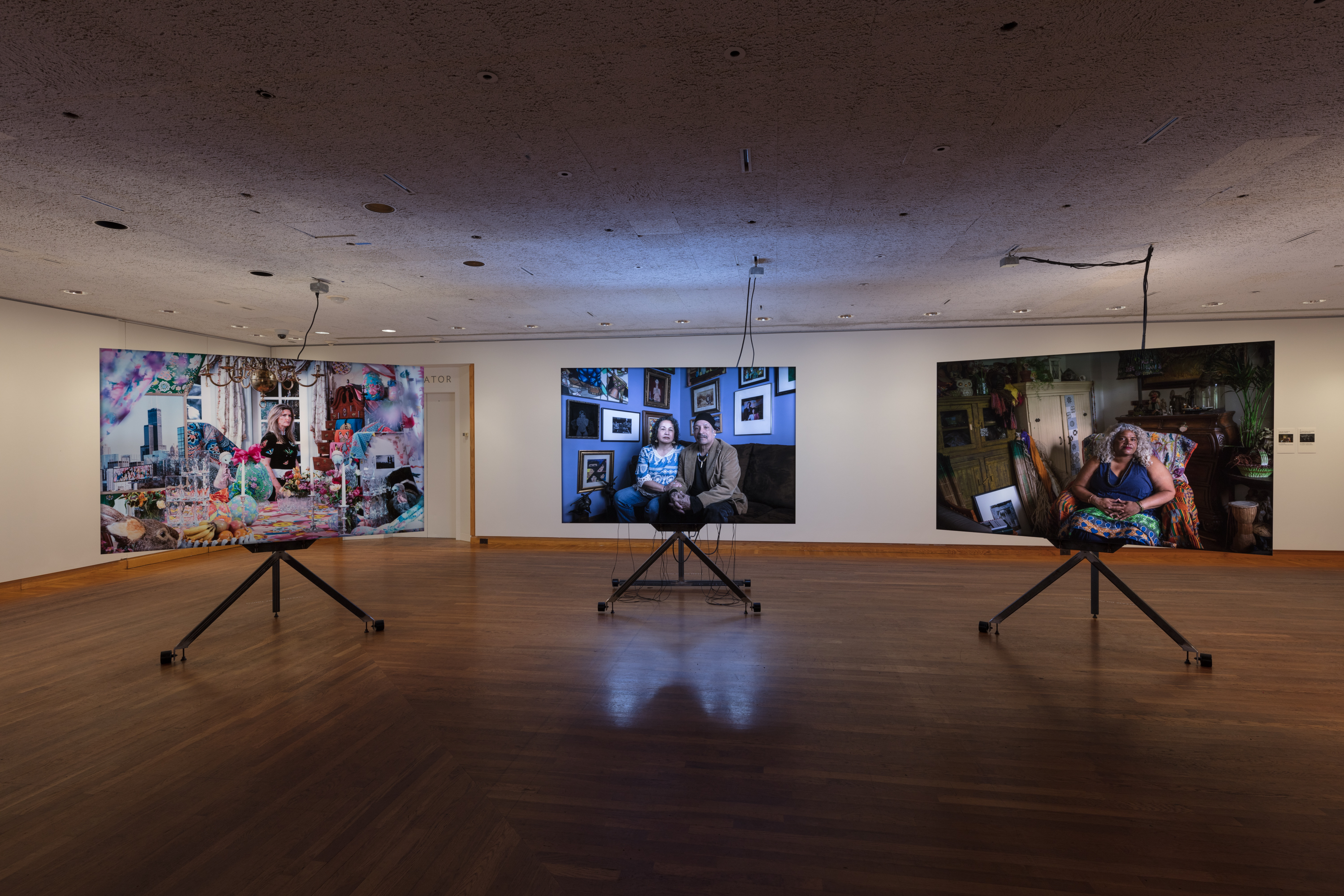
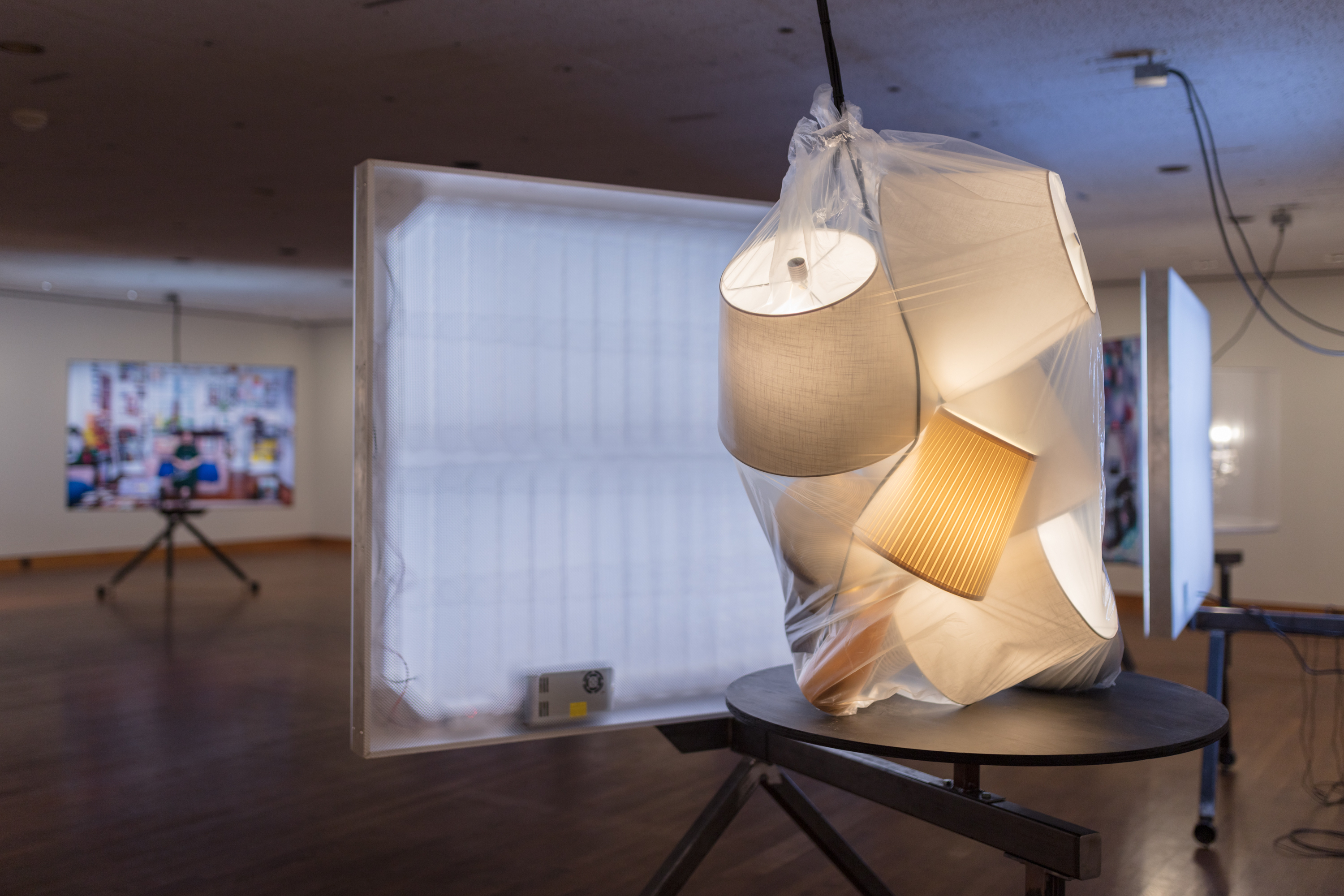
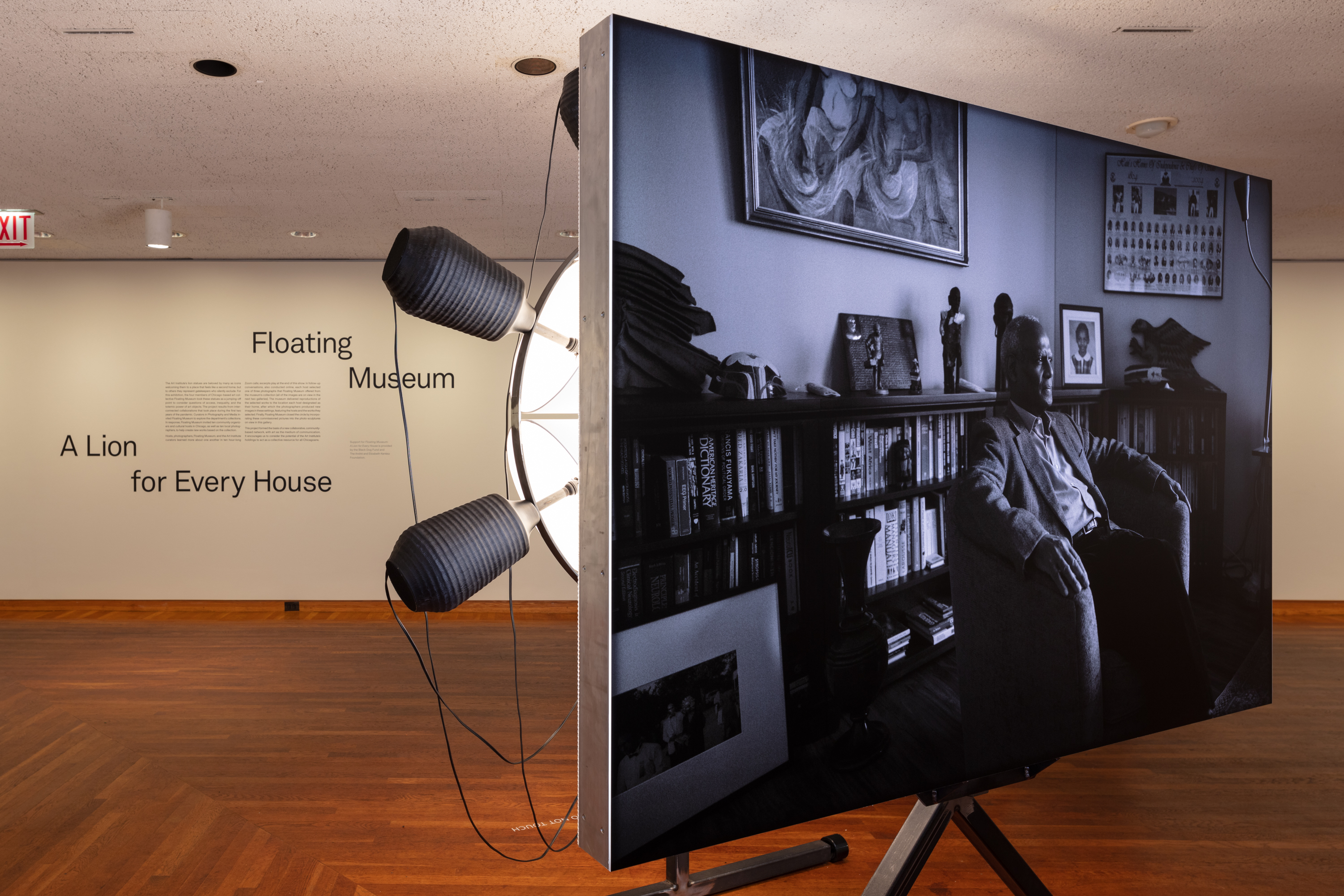
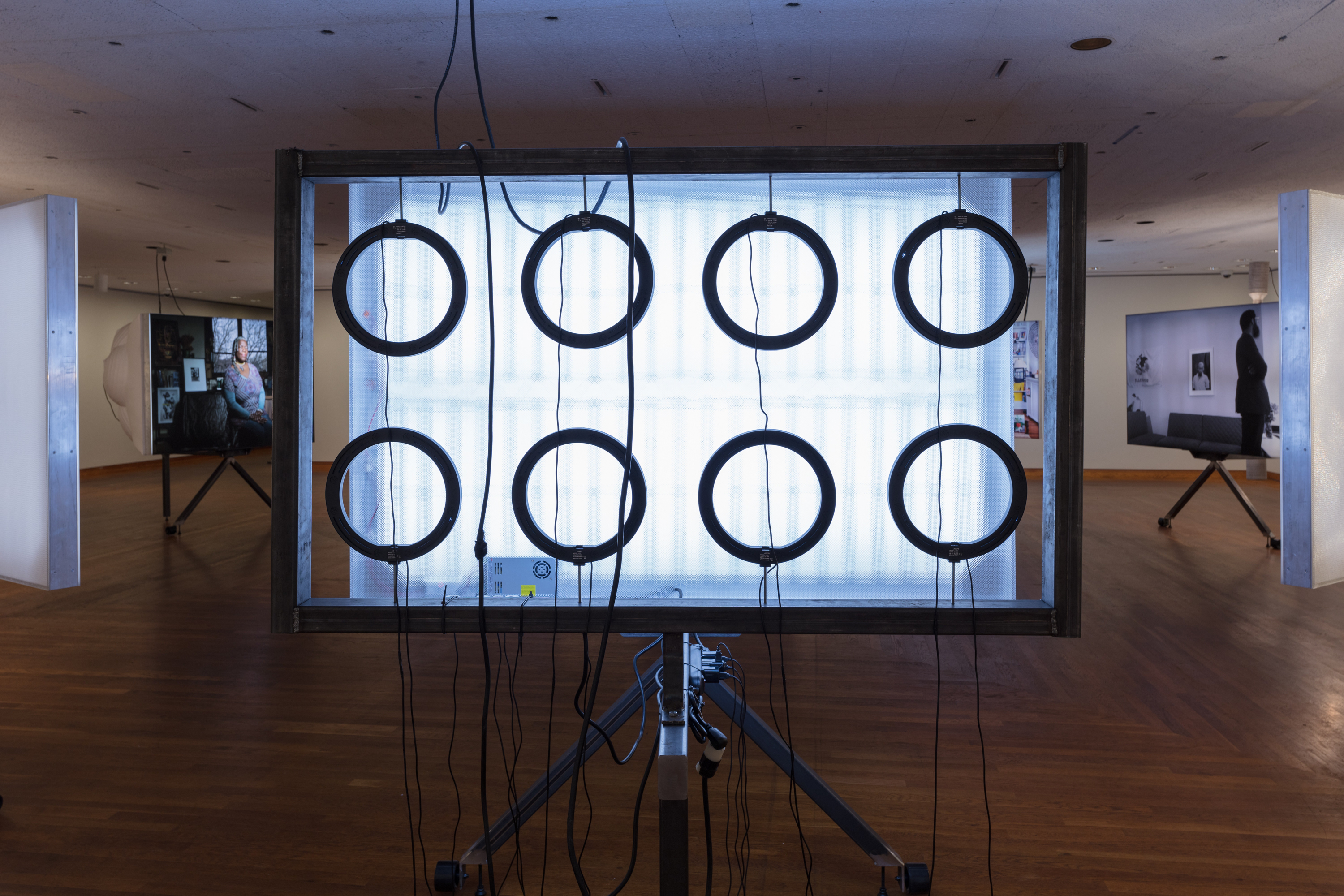
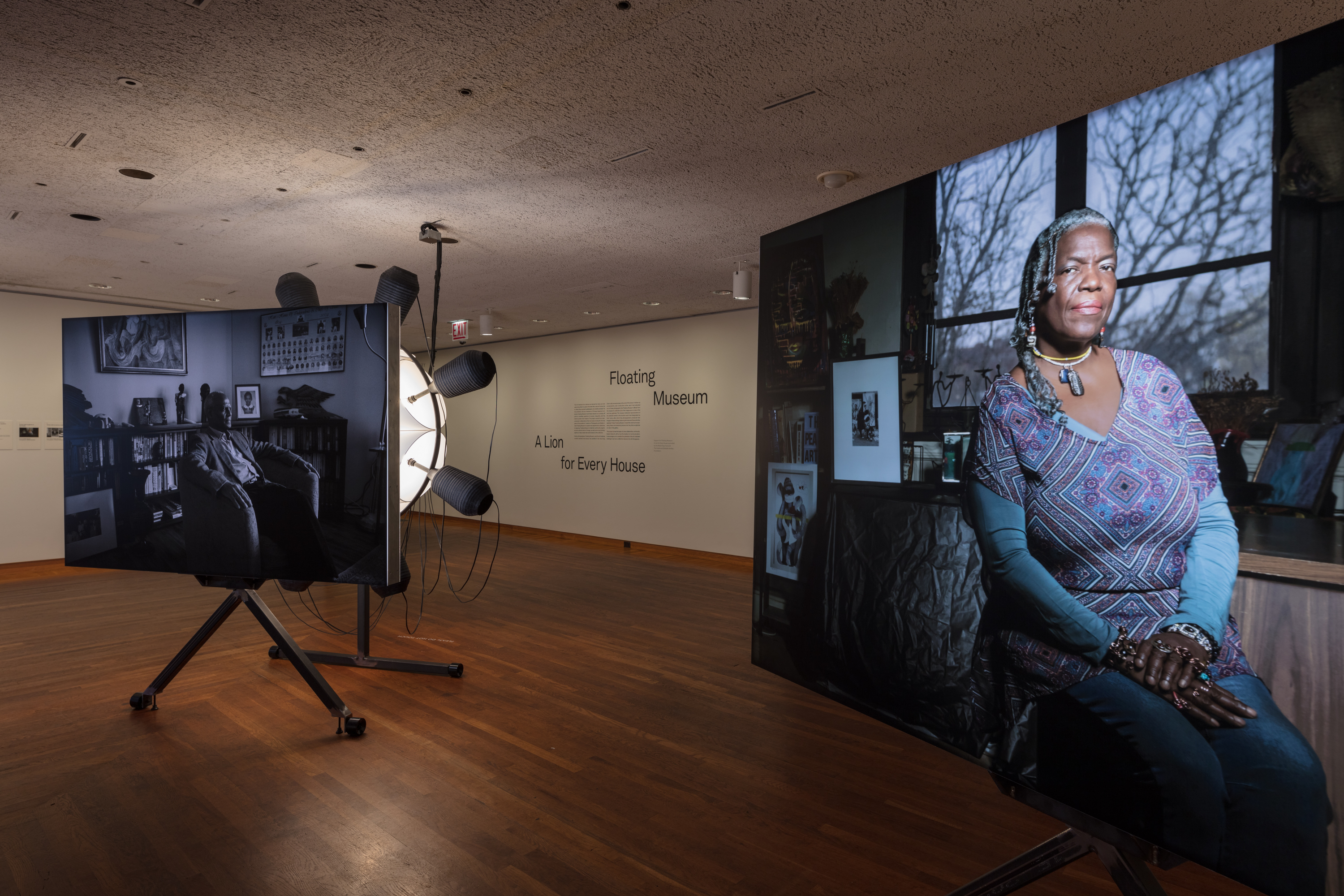
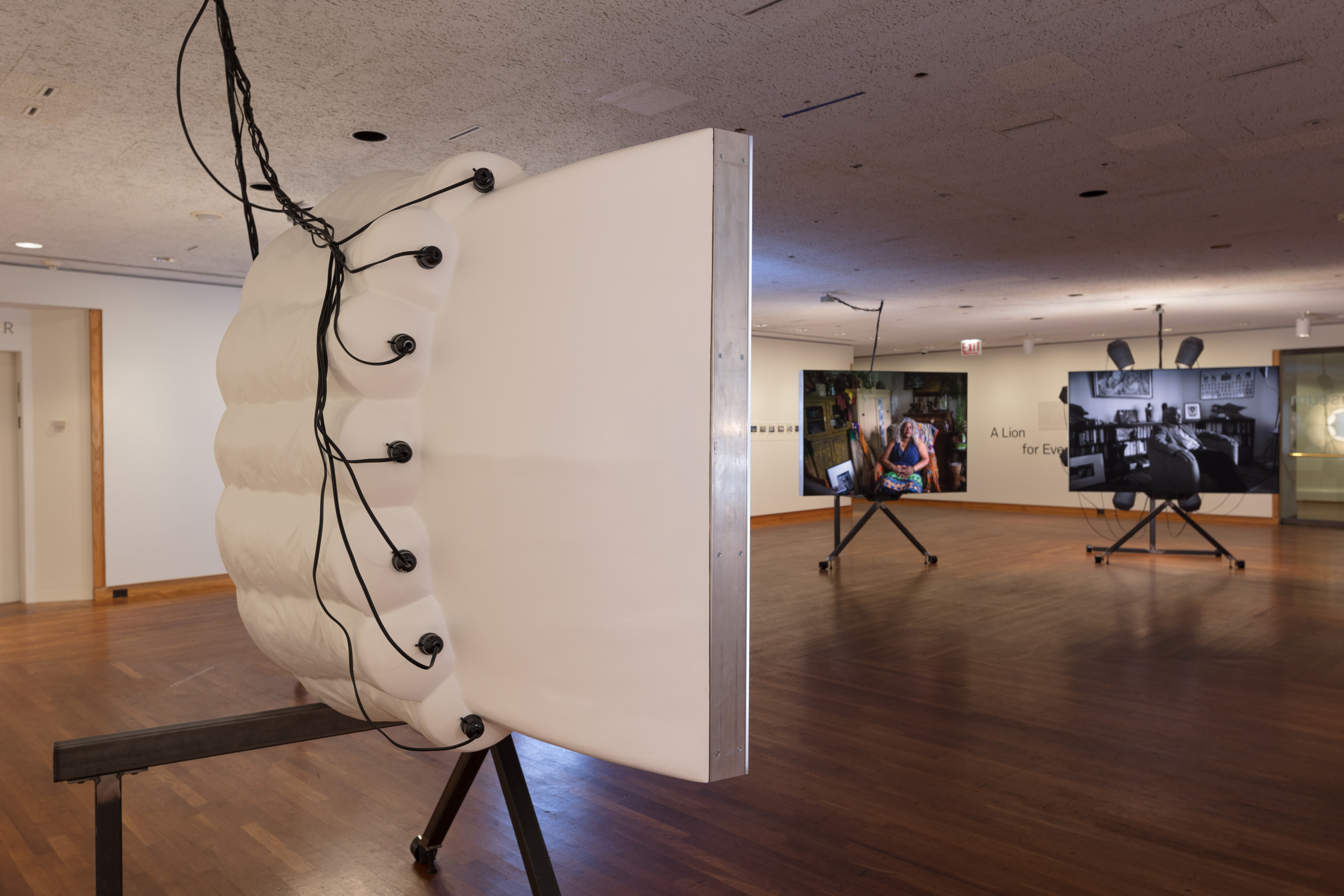
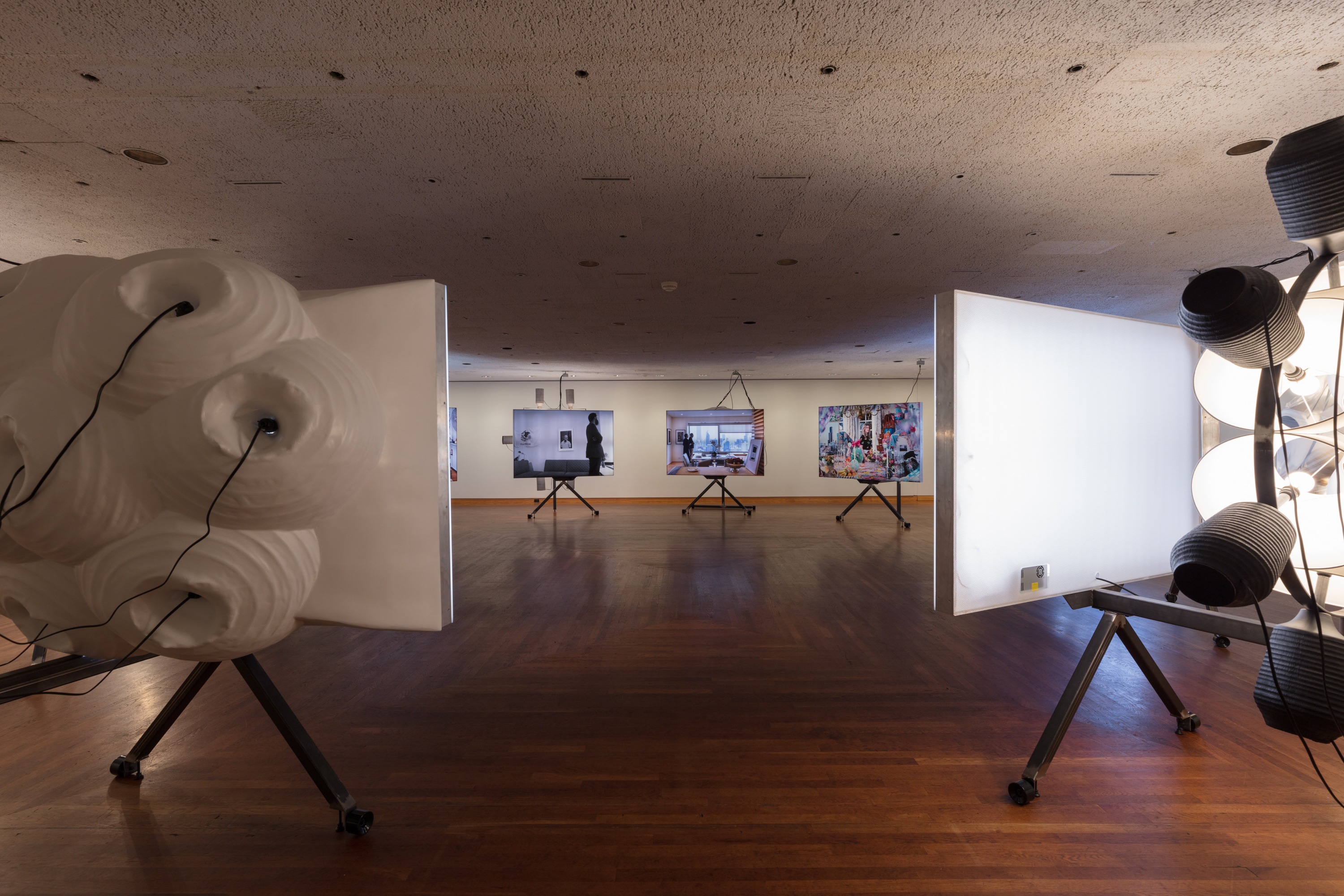
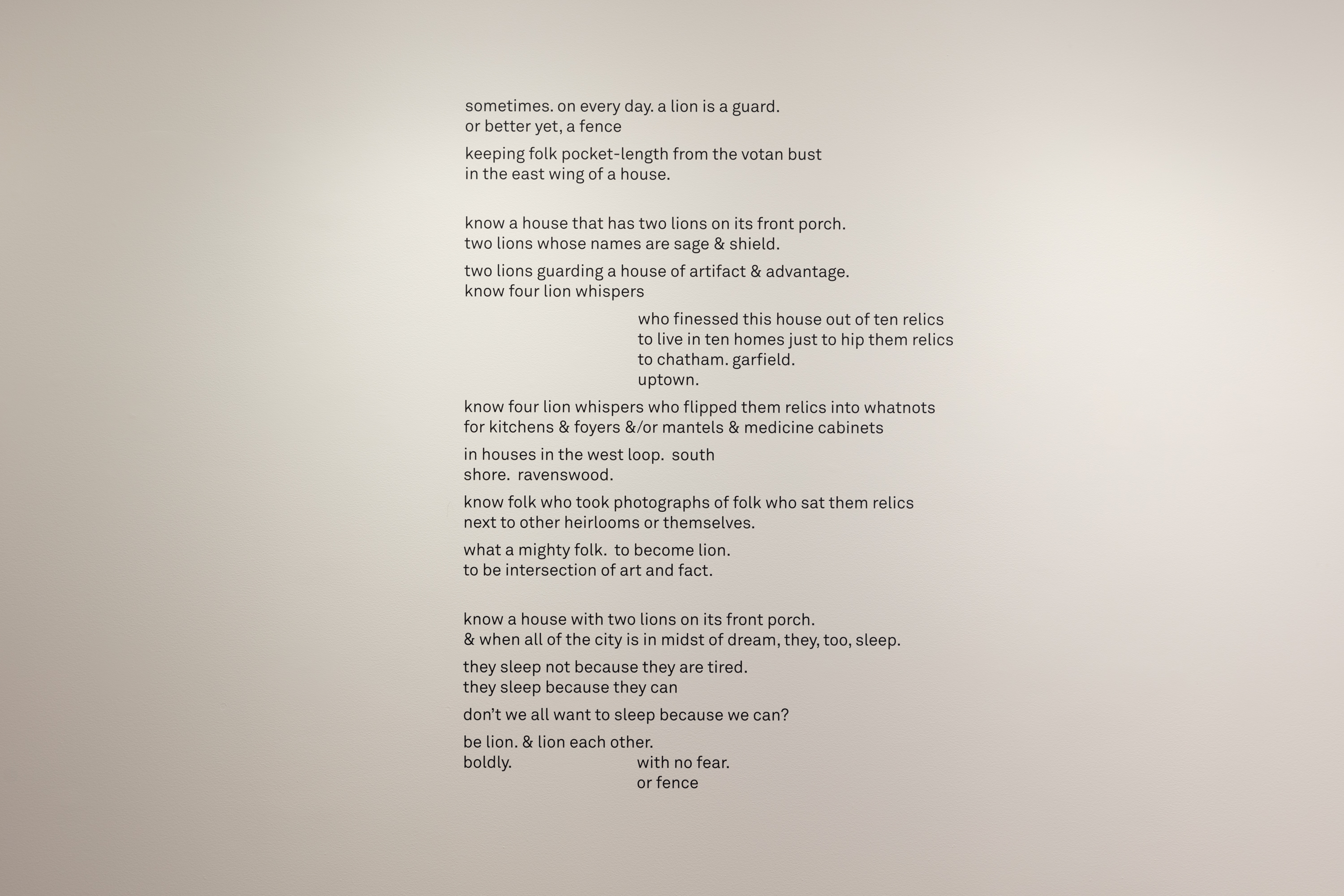
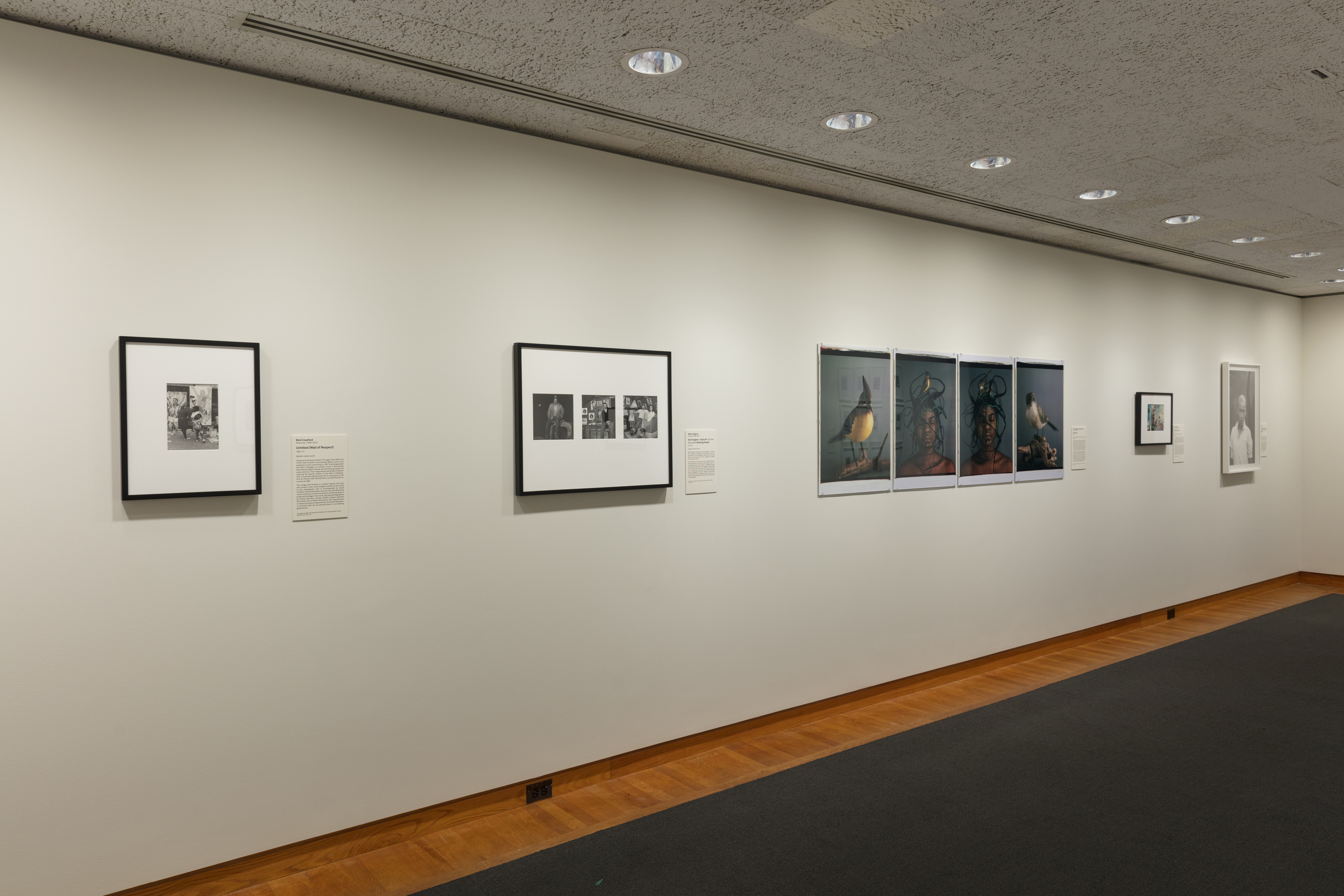
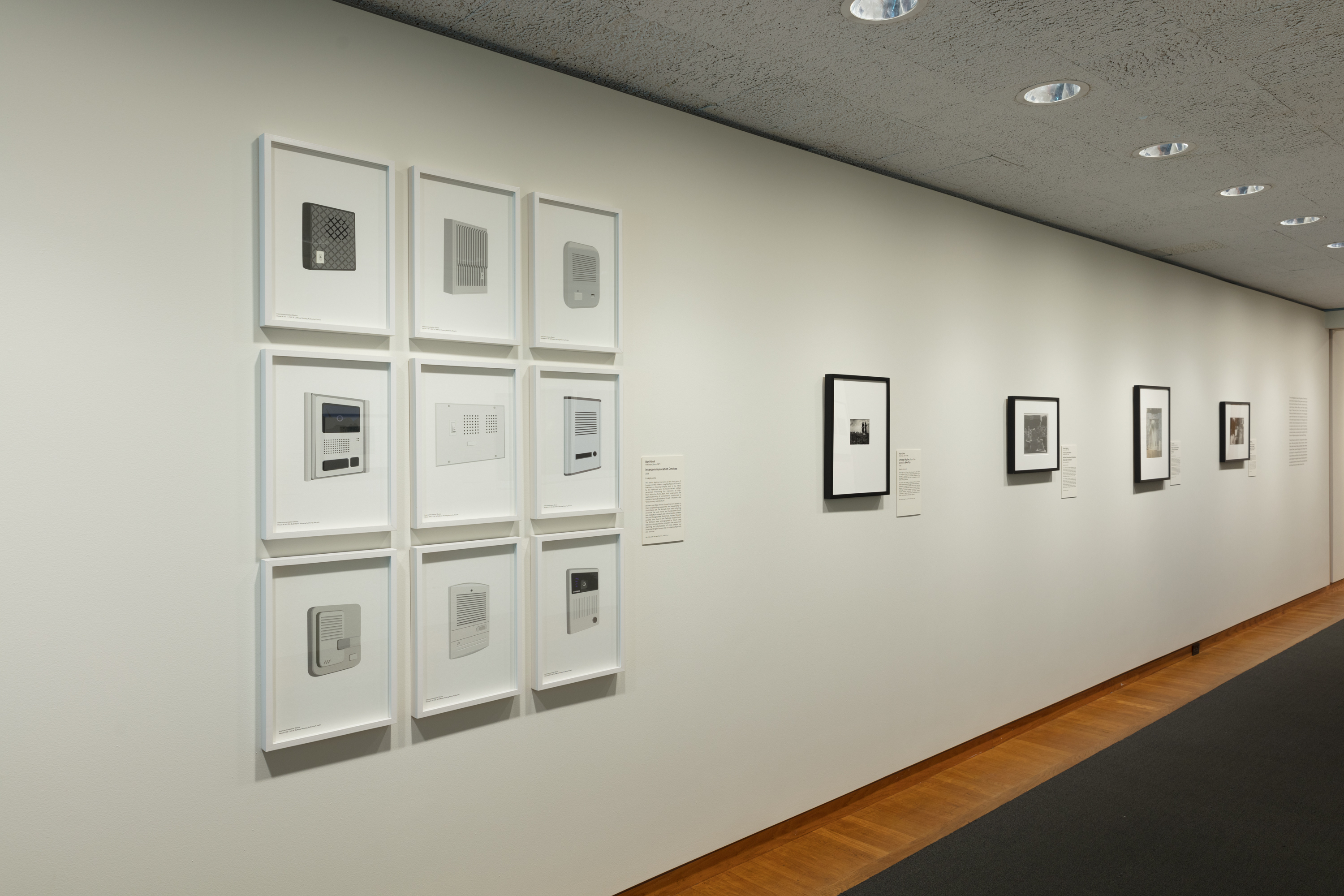
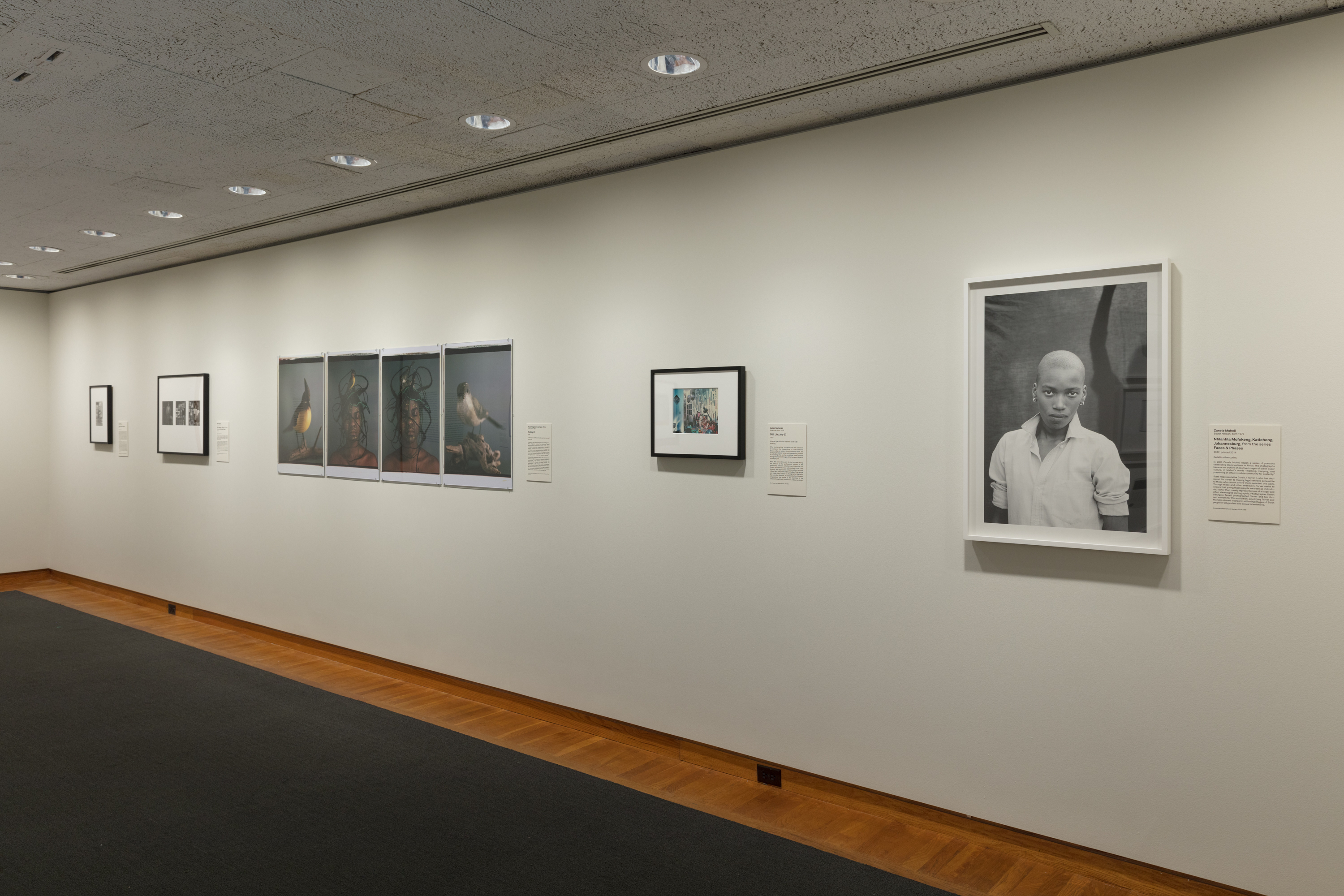
The Art Institute’s lion statues are beloved by many as icons welcoming them to a place that feels like a second home, but to others they represent gatekeepers who silently exclude. For this exhibition, the four members of Chicago-based art collective Floating Museum took these statues as a jumping-off point to consider questions of access, inequality, and the totemic power of art objects. The project results from interconnected collaborations that took place during the first two years of the pandemic. Curators in Photography and Media invited Floating Museum to explore the department’s collections. In response, Floating Museum invited ten community organizers and cultural hosts in Chicago, as well as ten local photographers, to help create new works based on the collection.
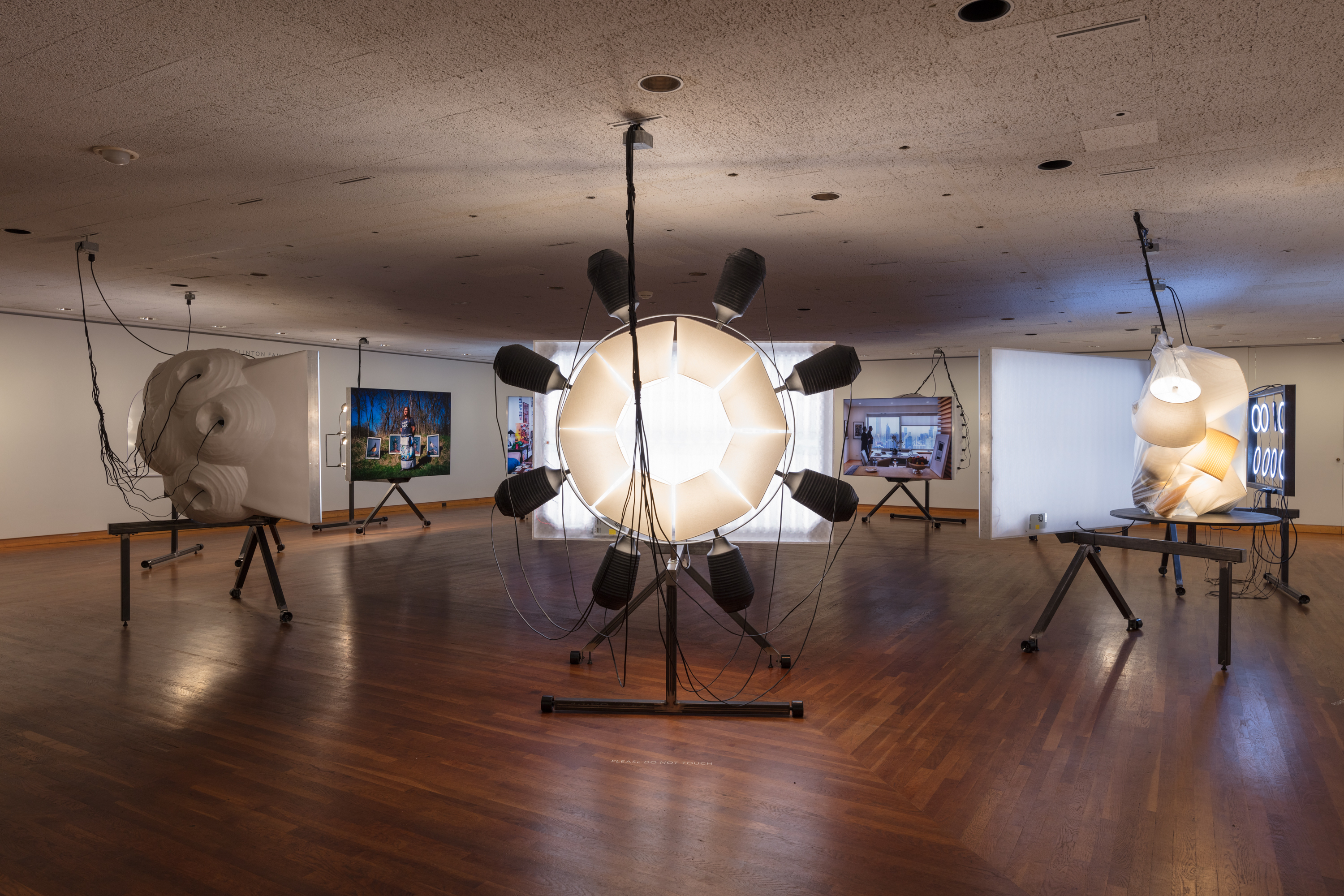
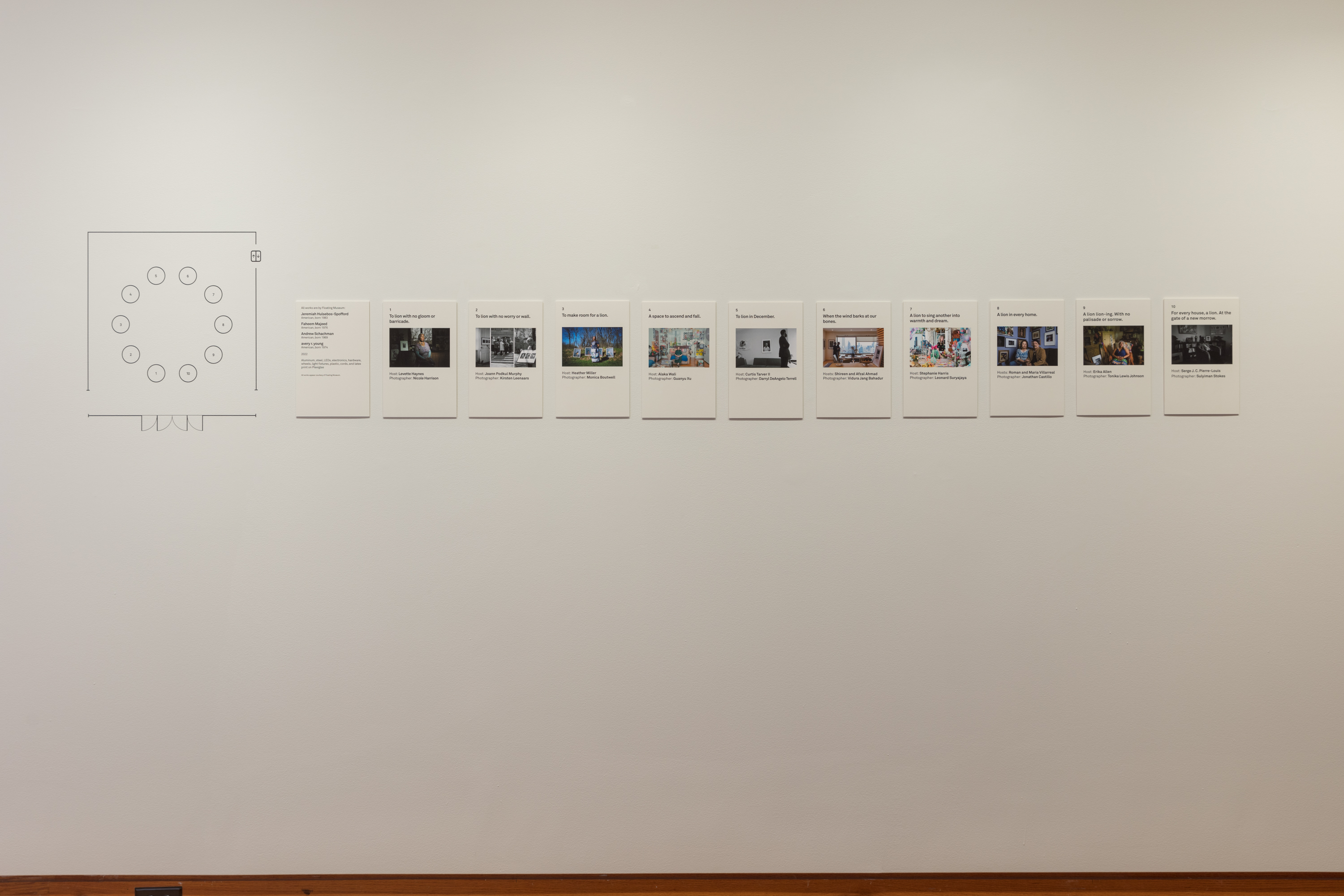
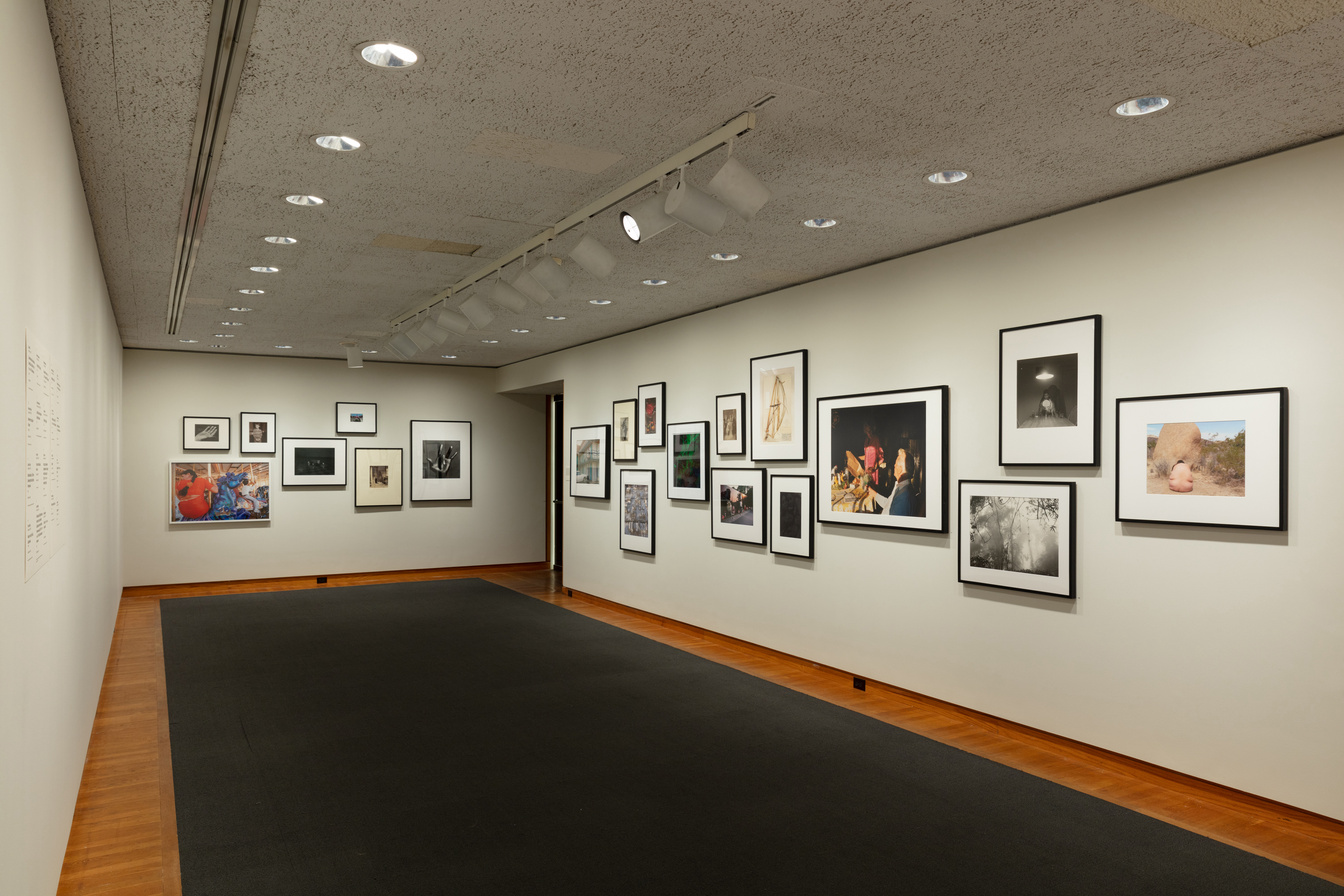
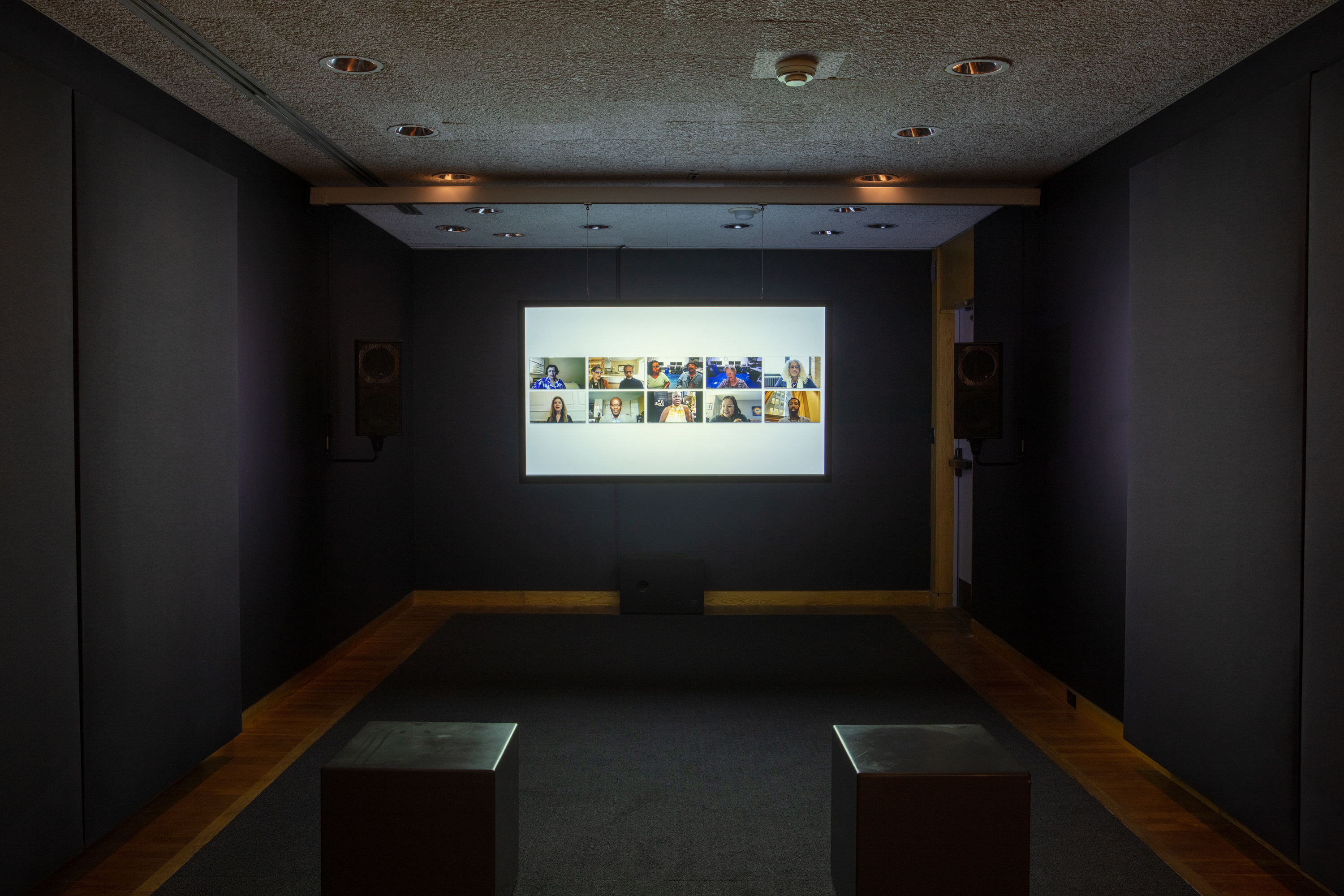
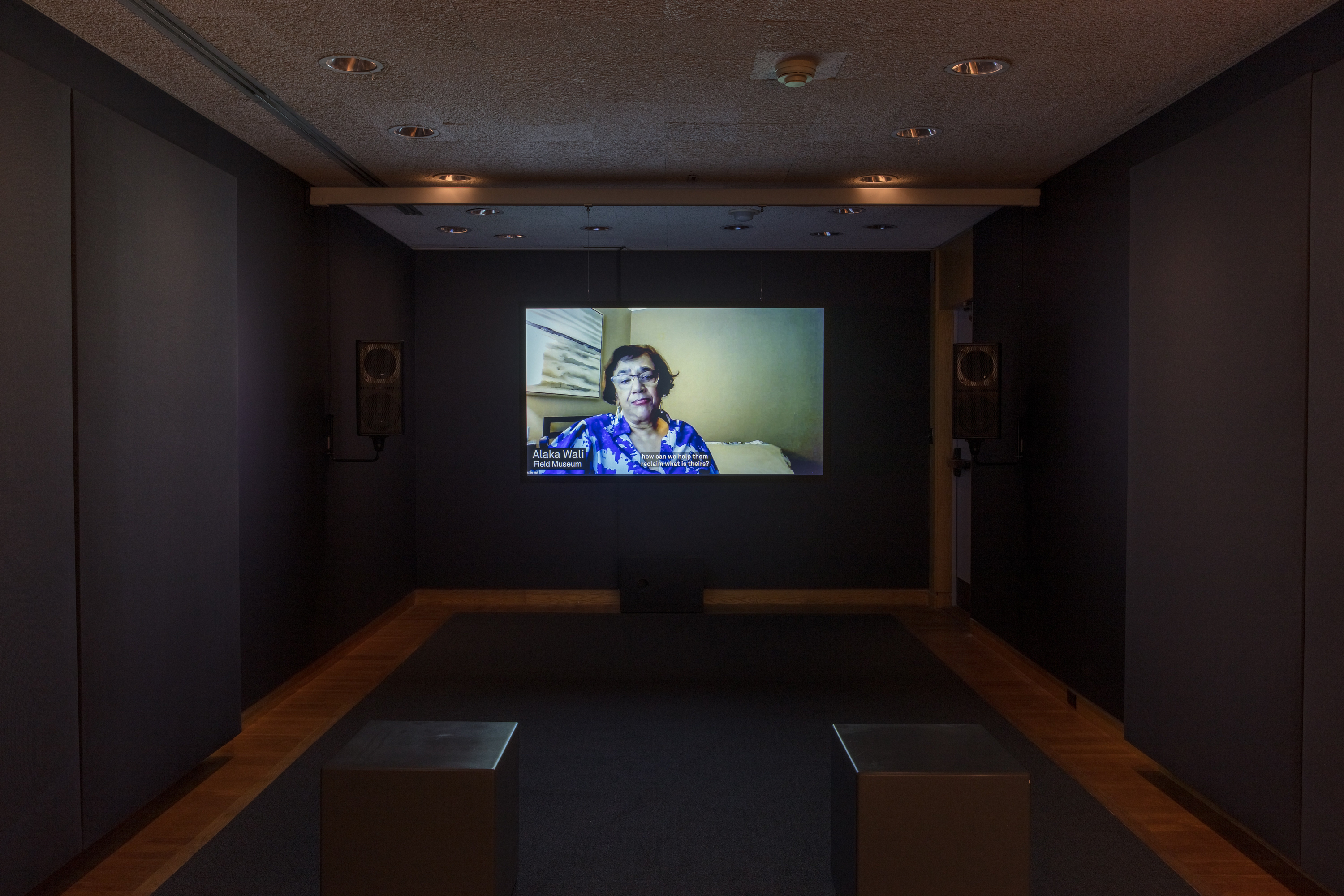
Hosts, photographers, Floating Museum, and the Art Institute curators learned more about one another in ten hour-long Zoom calls; excerpts play at the end of this show. In follow-up conversations, also conducted online, each host selected one of three photographs that Floating Museum offered from the museum’s collection (all of the images are on view in the next two galleries). The museum delivered reproductions of the selected works to the location each host designated as their home, after which the photographers produced new images in these settings, featuring the hosts and the works they selected. Finally, Floating Museum closed the circle by incorporating these commissioned pictures into the photo-sculptures on view in this gallery.
This project formed the basis of a new collaborative, community-based network, with art as the medium of communication. It encourages us to consider the potential of the Art Institute’s holding to act as a collective resource for all Chicagoans.
Photographers /
Sulyiman Stokes / Jonathan Castillo / Kirsten Leenaars / Nicole Harrison / Vidura Bahadur / Monica Boutwell / Tonika Johnson / Darryl DeAngelo Terrell / Guanyu Xu / Leonard Suryajaya
Hosts /
Serge JC Pierre-Louis / Maria & Roman Villarreal / Joann Podkul Murphy / Levette Haynes / Shireen & Afzal Ahmad / Heather Miller / Erika Allen / Curtis J. Tarver II / Alaka Wali / Stephanie Harris
Supporting Organizations /
Black Dog Fund
The André and Elizabeth Kertész Foundation
Floating Museum acknowledges support from the Illinois Arts Council Agency.
![]()
More to Read /
Exhibit Information
Official Art Institute of Chicago Exhibition Site
“With No Fear or Fence”: An Experiment in Collective Exhibition Making
by Matthew S Witkovsky
“If They Won’t Come to the Museum, Then the Museum Must Go to Them”
by Lori Waxman for HYPERALLERGIC
“Emergent Institutions: The Floating Museum’s 'A Lion for Every House' Makes New Connections”
by Pia Singh for NewCityArt
“An Exercise in Empathy and Trust: Collaborating with Lions”
by Joann Podkul-Murphy and Kirsten Leenaars for the Art Institute of Chicago
“A Lion For Every House: Interrogating How Art Exists In Space”
by Ayana Contreras for Vocalo
The Art Institute’s lion statues are beloved by many as icons welcoming them to a place that feels like a second home, but to others they represent gatekeepers who silently exclude. For this exhibition, the four members of Chicago-based art collective Floating Museum took these statues as a jumping-off point to consider questions of access, inequality, and the totemic power of art objects. The project results from interconnected collaborations that took place during the first two years of the pandemic. Curators in Photography and Media invited Floating Museum to explore the department’s collections. In response, Floating Museum invited ten community organizers and cultural hosts in Chicago, as well as ten local photographers, to help create new works based on the collection.
Hosts, photographers, Floating Museum, and the Art Institute curators learned more about one another in ten hour-long Zoom calls; excerpts play at the end of this show. In follow-up conversations, also conducted online, each host selected one of three photographs that Floating Museum offered from the museum’s collection (all of the images are on view in the next two galleries). The museum delivered reproductions of the selected works to the location each host designated as their home, after which the photographers produced new images in these settings, featuring the hosts and the works they selected. Finally, Floating Museum closed the circle by incorporating these commissioned pictures into the photo-sculptures on view in this gallery.
This project formed the basis of a new collaborative, community-based network, with art as the medium of communication. It encourages us to consider the potential of the Art Institute’s holding to act as a collective resource for all Chicagoans.
Photographers /
Sulyiman Stokes / Jonathan Castillo / Kirsten Leenaars / Nicole Harrison / Vidura Bahadur / Monica Boutwell / Tonika Johnson / Darryl DeAngelo Terrell / Guanyu Xu / Leonard Suryajaya
Hosts /
Serge JC Pierre-Louis / Maria & Roman Villarreal / Joann Podkul Murphy / Levette Haynes / Shireen & Afzal Ahmad / Heather Miller / Erika Allen / Curtis J. Tarver II / Alaka Wali / Stephanie Harris
Supporting Organizations /
Black Dog Fund
The André and Elizabeth Kertész Foundation
Floating Museum acknowledges support from the Illinois Arts Council Agency.
More to Read /
Exhibit Information
Official Art Institute of Chicago Exhibition Site
“With No Fear or Fence”: An Experiment in Collective Exhibition Making
by Matthew S Witkovsky
“If They Won’t Come to the Museum, Then the Museum Must Go to Them”
by Lori Waxman for HYPERALLERGIC
“Emergent Institutions: The Floating Museum’s 'A Lion for Every House' Makes New Connections”
by Pia Singh for NewCityArt
“An Exercise in Empathy and Trust: Collaborating with Lions”
by Joann Podkul-Murphy and Kirsten Leenaars for the Art Institute of Chicago
“A Lion For Every House: Interrogating How Art Exists In Space”
by Ayana Contreras for Vocalo